

Kay A. Orr: Breaking Barriers in Nebraska’s Highest Office
On election night in 1986, the outcome in Nebraska signaled more than a shift in political leadership. It marked a national first in American politics.
Kay A. Orr had been elected governor of Nebraska, becoming the first Republican woman ever elected governor in the United States. At a time when few women held executive office at the state level, her election placed Nebraska at the center of a changing political landscape.
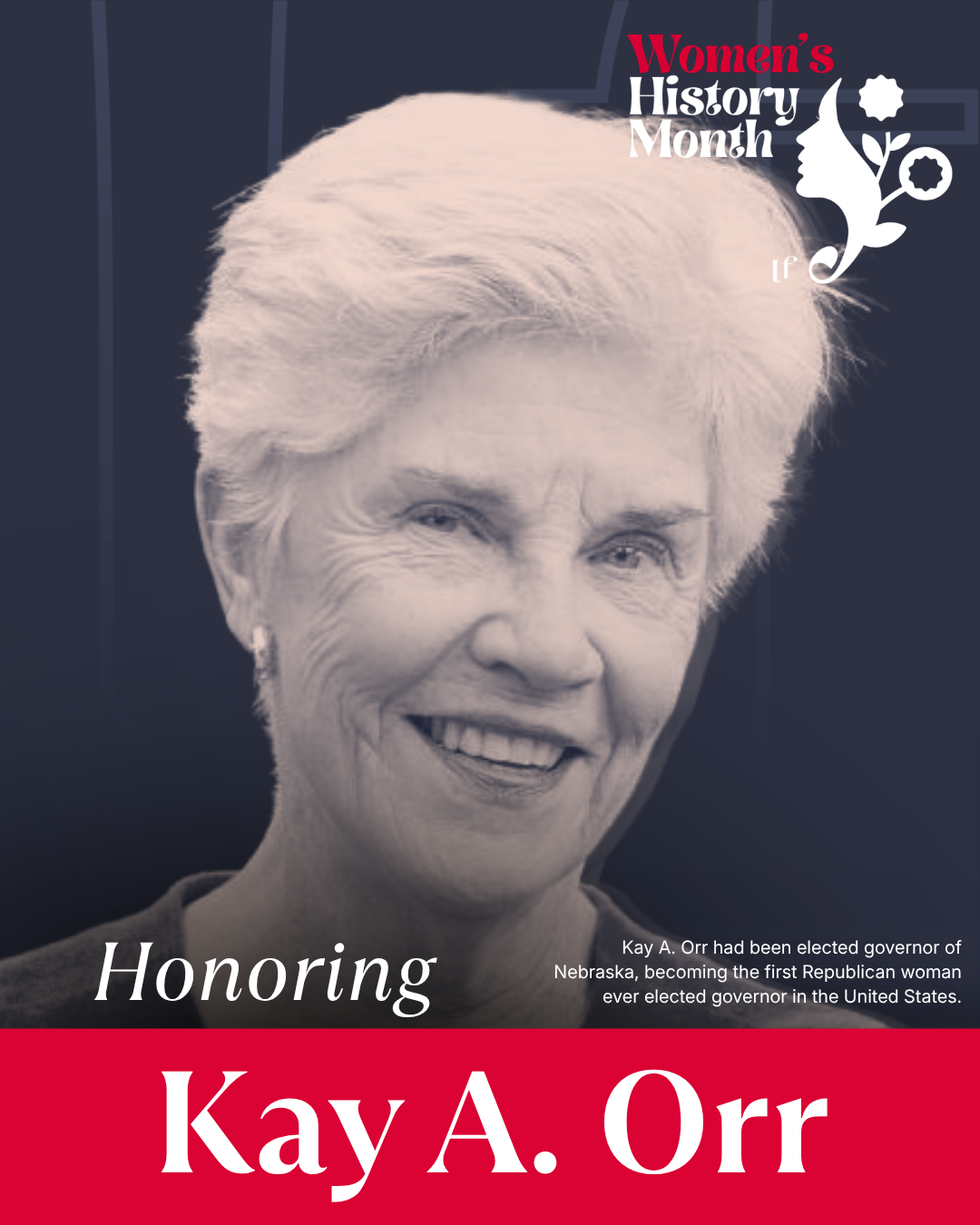
Orr was born on January 2, 1939, in Burlington, Iowa. She attended the University of Iowa in 1956-57, before beginning her career in business and later entering public service. In the early 1960s, she moved to Lincoln, Nebraska, where she became active in Republican politics, initially through volunteer work and local party organizing. She became the first woman to serve as chief of staff to a Nebraska governor.
Her entry into elected office began in 1981, when she was appointed to fill a vacancy as Nebraska State Treasurer. The following year, she was elected to a full term, becoming the first woman elected to a statewide constitutional office in Nebraska, and served in the role until 1986. In that position, Orr focused on modernizing the office and improving financial management systems, building a reputation for strong administrative competence and fiscal oversight.
Four years later, she entered the race for governor. The 1986 election was closely watched, both within Nebraska and nationally, as it presented the possibility of another historic first. Orr won the race and was sworn in as Nebraska’s 36th governor in 1987, becoming the state’s first female governor.
Her administration focused on job creation, supporting rural communities facing agricultural distress, and implementing tax policies designed to encourage business expansion. Orr worked to expand Nebraska’s international trade relationships, leading trade missions to countries such as Japan in an effort to strengthen export opportunities for Nebraska producers.
During her tenure, the state also navigated economic pressures affecting the agricultural sector in the late 1980s. Orr’s administration emphasized business growth, fiscal management, and efforts to position Nebraska competitively in national and global markets.
In 1990, Orr sought a second term but was defeated by Democratic candidate Ben Nelson, concluding her time as governor in 1991.
Orr’s election marked a lasting milestone. Her victory expanded the visibility of women in executive leadership and contributed to a broader shift in who could be seen, and elected, as a state’s chief executive.
In the years since, Orr has remained active in civic and political efforts, continuing to be recognized for her role in Nebraska’s history.
Her legacy is tied not only to the policies of her administration, but also to the precedent her election set, one that helped open the door for future generations of women seeking leadership at the highest levels of state government.
