

Brigitte McQueen and the Vision That Transformed North Omaha’s Arts Scene
When Brigitte McQueen arrived in Omaha in 2006, North Omaha was not widely recognized as a contemporary arts destination. Within five years, she would help change that.
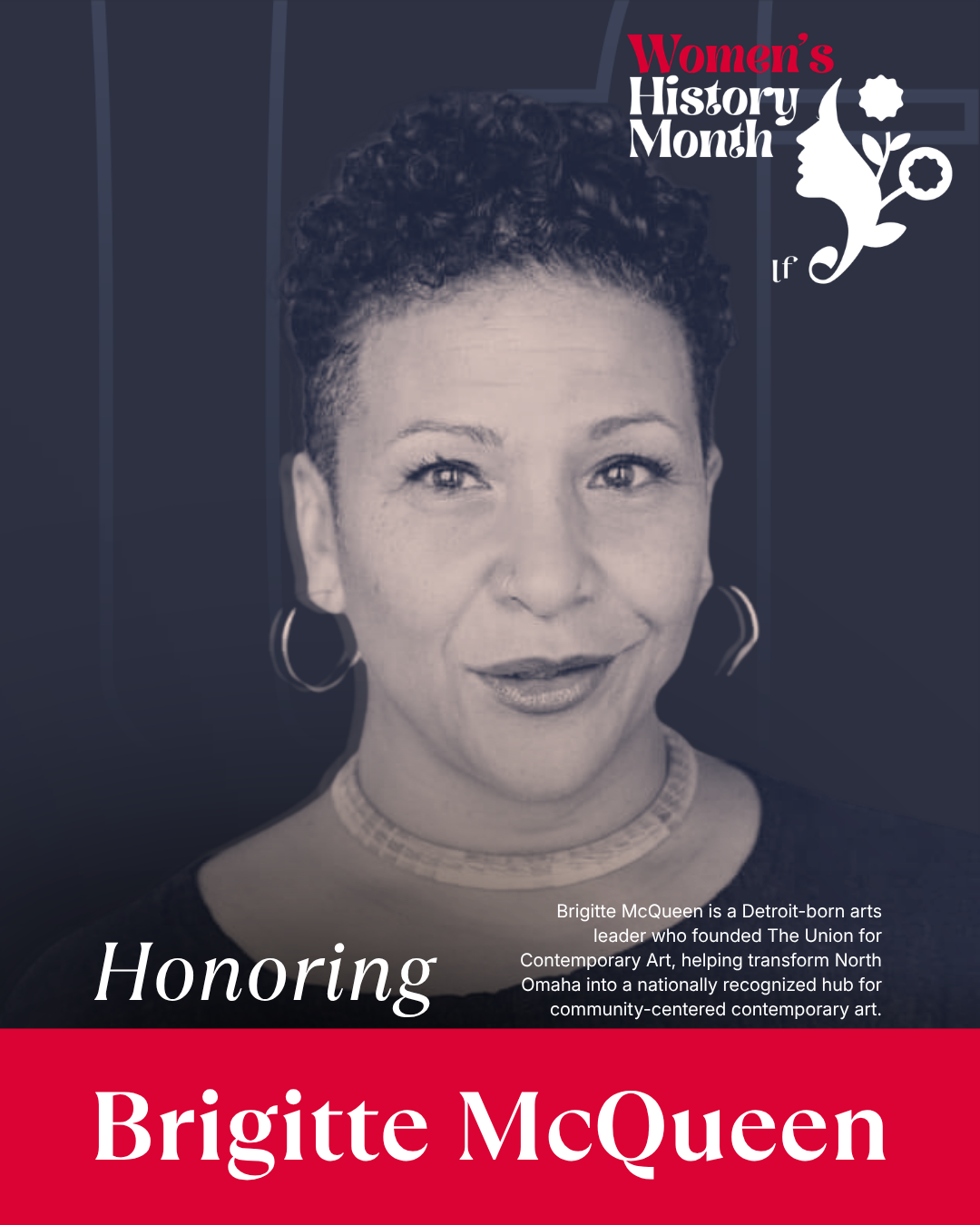
Originally from Detroit, McQueen moved to New York at 18 to study journalism at St. John’s University in Queens before beginning her career in media, including nearly a decade at Time Inc. on Teen People. After moving to Omaha in 2006, she opened a gallery space called PULP. There, she began working closely with local artists. Although the space closed during the 2009 recession, the experience deepened her understanding of the challenges artists faced and shaped her vision for a more supportive arts ecosystem. She later started working at the Bemis Center for Contemporary Arts, as a program manager, where she managed the underground gallery and helped develop exhibitions. While working at the Bemis Center, she became a strong advocate for local artists, recognizing the need for more accessible, grassroots support systems in Omaha.
In 2011, she founded The Union for Contemporary Art in North Omaha, establishing a space dedicated to supporting artists while intentionally investing in a historically disinvested community. The organization began in a former food pantry space on Burdette Street, reflecting its early focus on accessibility and neighborhood connection. Her approach centered on the idea that artists are not separate from neighborhoods, they are part of the social and economic fabric that shapes them.
The Union was designed as more than a gallery. The idea grew out of McQueen’s experience working in Omaha’s arts community, where she saw that many spaces did not fully support local and emerging artists, particularly those from underrepresented backgrounds. From its earliest days, it combined artist residencies, exhibitions and public programs with workforce development and neighborhood-based initiatives. The organization offers studio space, professional development, and access to national networks for artists, while also creating opportunities for local residents through youth programs, community partnerships and creative entrepreneurship.
Under McQueen’s leadership, The Union developed a nationally recognized artist-in-residence program that brings artists from across the country to Omaha while maintaining a strong emphasis on local voices. The program provides artists with studio space, financial support, and professional development opportunities, helping them build sustainable creative careers. Over time, The Union has expanded its reach, supporting hundreds of artists through fellowships, residencies, and grant programs. Its exhibitions and programming frequently highlight Black artists and other underrepresented creators, reflecting both the cultural history of North Omaha and its present-day creative community.
In addition to its arts programming, The Union has played a role in broader community development efforts. Initiatives such as its workforce training programs and community-based investments have focused on creating economic opportunity alongside cultural engagement, aligning arts access with neighborhood stability. Since 2020, its Populus Fund, supported by The Andy Warhol Foundation for the Visual Arts, has distributed more than $300,000 in grants to artists across the region, further extending its impact beyond Omaha. This growth reflects the organization’s evolution from a grassroots initiative, launched with an initial $60,000 donation, into a multimillion-dollar arts institution.
McQueen’s work has contributed to a shift in how North Omaha is perceived within the regional and national arts landscape, drawing attention from artists, institutions, and audiences across the country. Through The Union, the neighborhood has become a site for contemporary art that is both place-based and community-informed.
Her impact has been recognized nationally, including receiving the Marian Anderson Leadership in the Arts Award. Her leadership reflects a model in which arts organizations function not only as cultural institutions, but also as anchors for community connection, creative opportunity and long-term community investment.
