

Rachel Jacobson and the Art of Building Omaha’s Creative Future
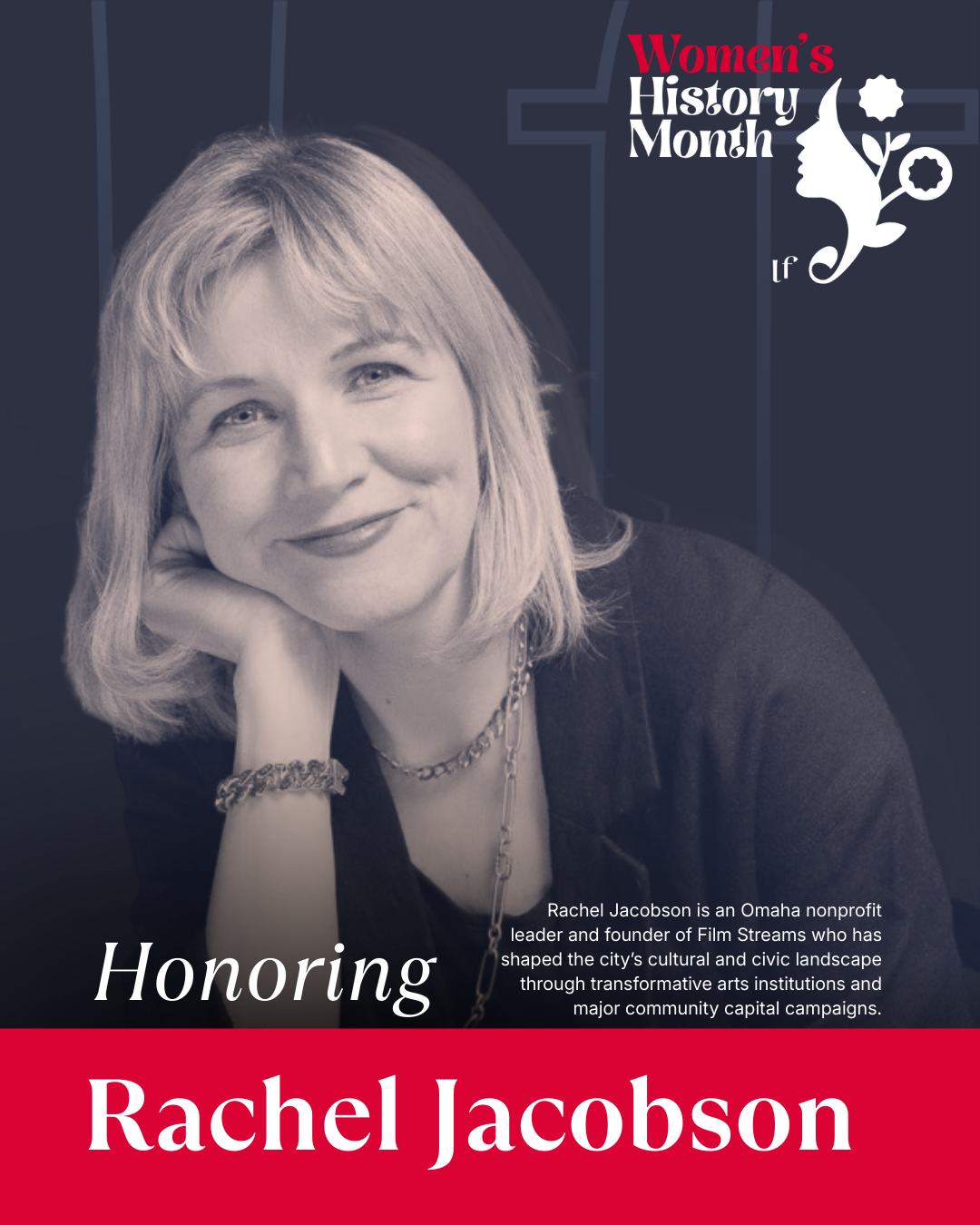
In Omaha, Rachel Jacobson’s name is closely tied to the spaces where community gathers, stories unfold, and civic life expands.
An Omaha native, Jacobson founded Film Streams in 2005 with a clear conviction: film is not just entertainment, it is art.
In 2007, the Ruth Sokolof Theater opened in North Downtown alongside Saddle Creek Records’ Slowdown, creating a cultural hub that helped redefine the city’s creative core.
More than a decade later, in December 2017, Film Streams reopened the historic Dundee Theater, a restored 1925 neighborhood cinema. The revival preserved an architectural landmark while deepening Omaha’s connection to independent and international film.
At the heart of the organization’s work is its First-Run Films program, which brings American independent films, documentaries, and international theatrical premieres to Omaha and the surrounding region. The program reflects Jacobson’s belief that film offers a powerful window into other people’s experiences, expanding empathy and perspective in a city often described as flyover country.
She served as executive director of Film Streams from 2005 to 2020.
Her leadership has also shaped Omaha’s civic landscape. From 2020 to 2025, Jacobson served as president of Heritage Omaha, leading more than $250 million in capital campaigns. Those efforts supported projects such as Kiewit Luminarium, a new science center on the riverfront, and the city’s new Central Library, one of the largest privately funded investments in a public library in the country.'
She was inducted into the Aksarben Court of Honor in 2021, alongside her late father, David Jacobson.
With more than 25 years in the nonprofit sector, Jacobson brings expertise in fundraising, governance, and organizational growth. A graduate of the University of Illinois and a mother of two daughters, she is now building Pedal, a digital platform designed to align mission and money for nonprofit leaders.
Her work reflects a simple truth: strong institutions create stronger communities.
