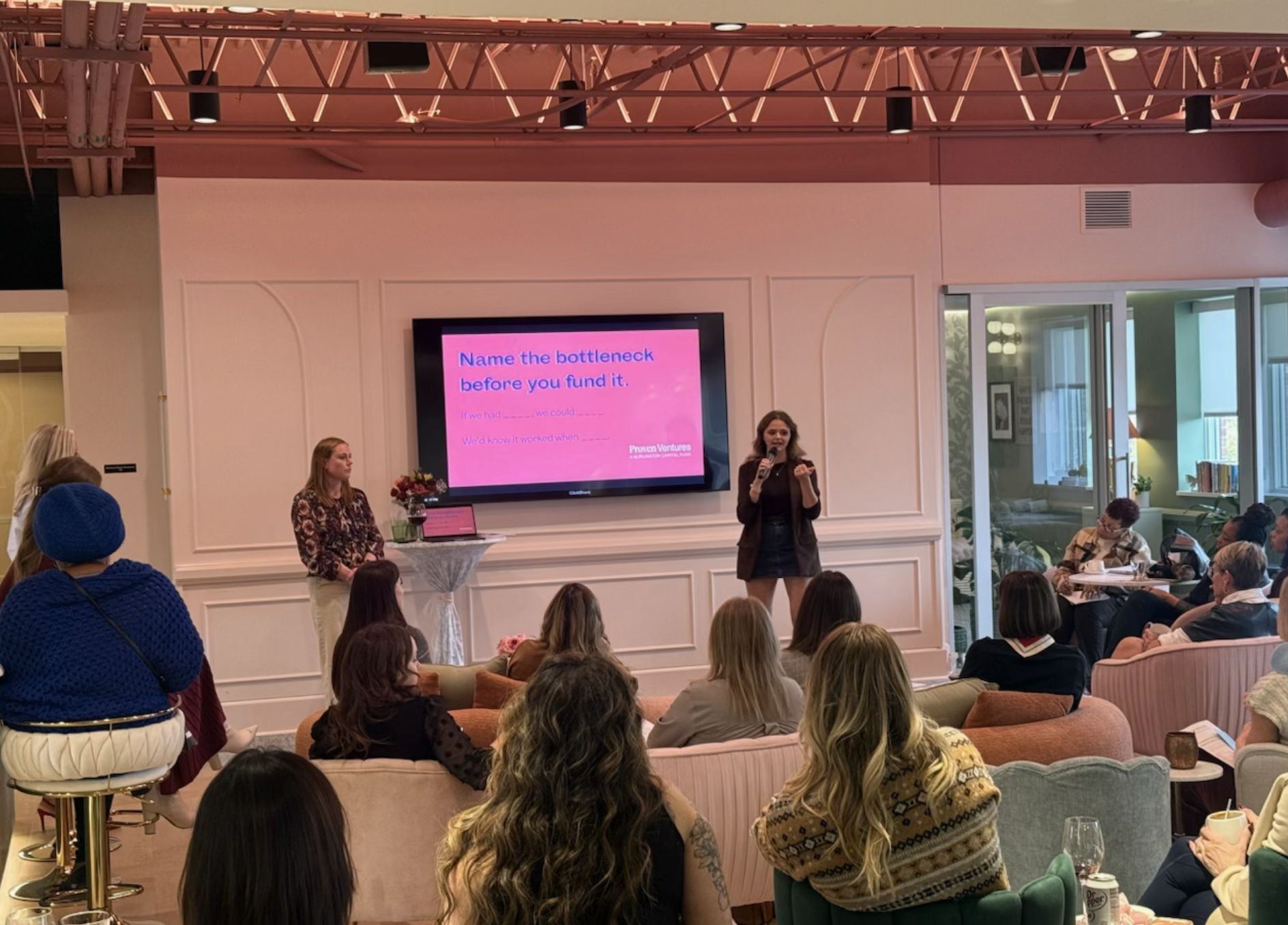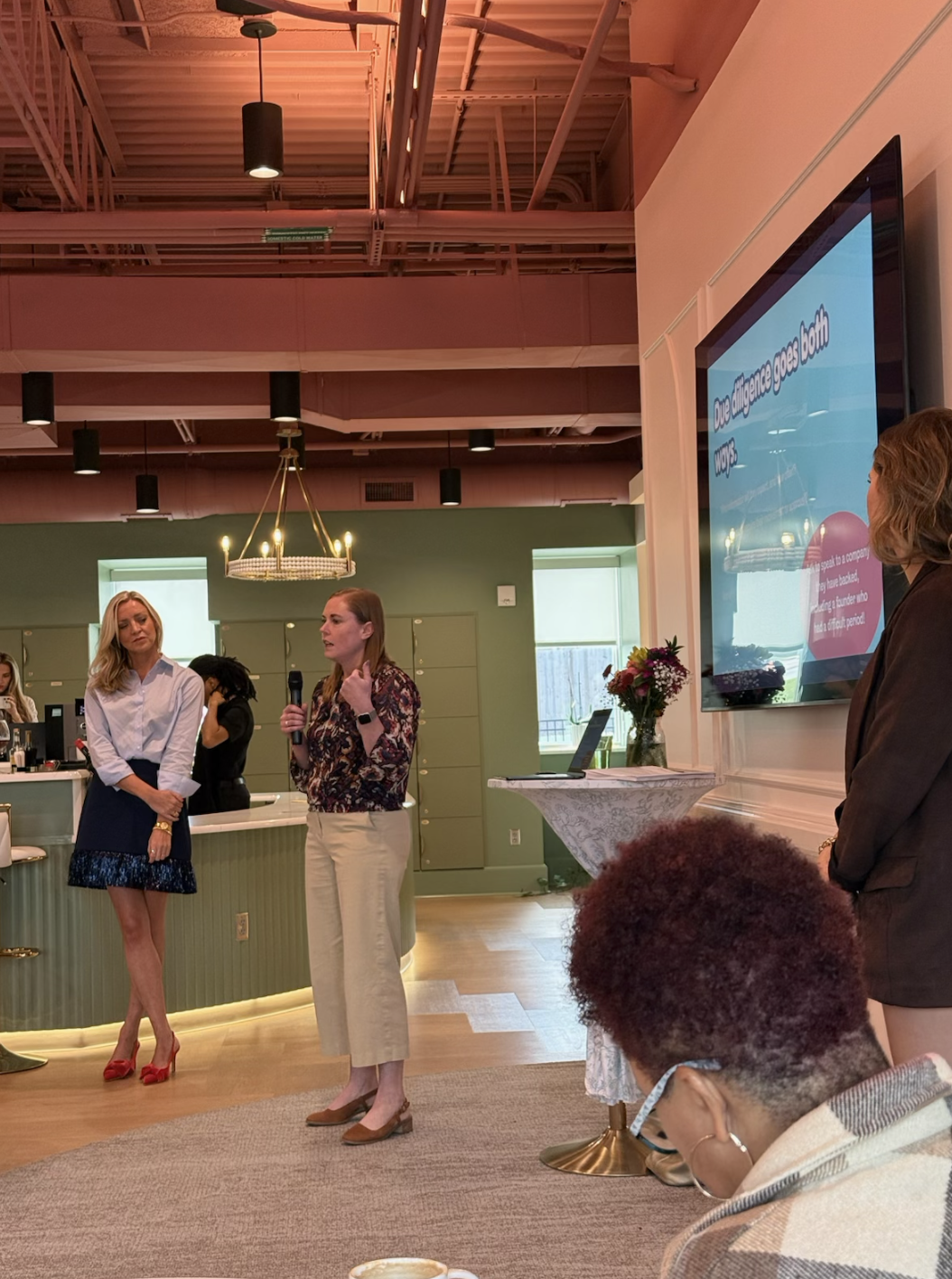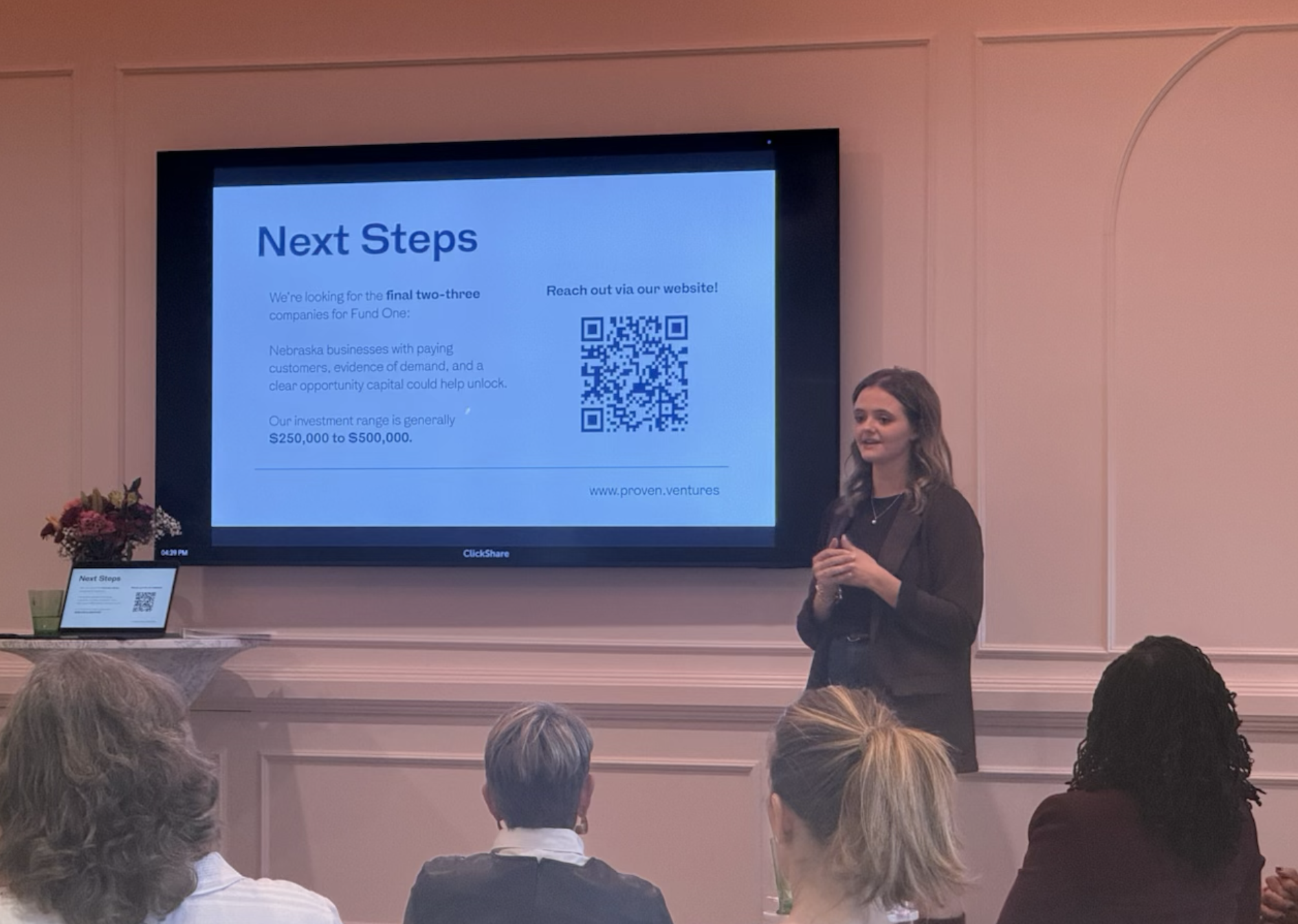

Proven Ventures filled the room at Legacy Collective tonight, Nov. 6, for a conversation about raising money and keeping ownership of a business. As the discussion turned to what it takes to build a company, women in the room began sharing their own experiences. They talked about what had worked, where they had failed, and what they had learned along the way.
Erica Wassinger, Mary Blaney and Gabrielle Keaton led the discussion at Women, Capital & Ownership, a happy hour for women considering entrepreneurship or working to grow a company. They walked through when it might make sense to finance growth with money the business already earns, when outside capital could help, and what founders should ask before they sign a deal.
They also explained how Proven Ventures structures its investments. The Nebraska fund uses a debt-equity model that combines features of a loan with an ownership stake. Under the model, founders can use an agreed share of revenue to buy back the equity over time. That gave the room a practical way to talk about ownership after an investment closes. How much of the company does the investor own? How does the founder buy back that stake? What will the payments mean for the business as it grows?
Hear Wassinger explain the model on Startups with Stu.
The team’s invitation was straightforward. If you’re wondering whether Proven Ventures might be a fit, reach out. An introductory conversation is a chance to explain what you’re building, what you need the money for, and what you want to know about the terms.
The questions women raised at Legacy Collective were so thoughtful, especially surrounding some of the pitfalls founders potentially make when scaling their business.
Many of those same topics Proven Ventures has answered in their blogs, newsletters, playbooks, and social content.
Blaney’s pieces explain what cash returns tell investors. Keaton’s writing starts with a problem founders recognize. Sales can rise while cash gets tighter if a company has to pay for inventory
If you haven’t already, get to know Proven Ventures.