

Leola McDonald: Keeping the Sound of North Omaha Alive
The door opened to the sound of music already playing.
Inside, the records were stacked wall to wall — soul, jazz, blues, gospel — each one part of a larger story. Customers didn’t just come to buy music. They came to listen, to talk, to stay awhile.
Leola McDonald was behind the counter.
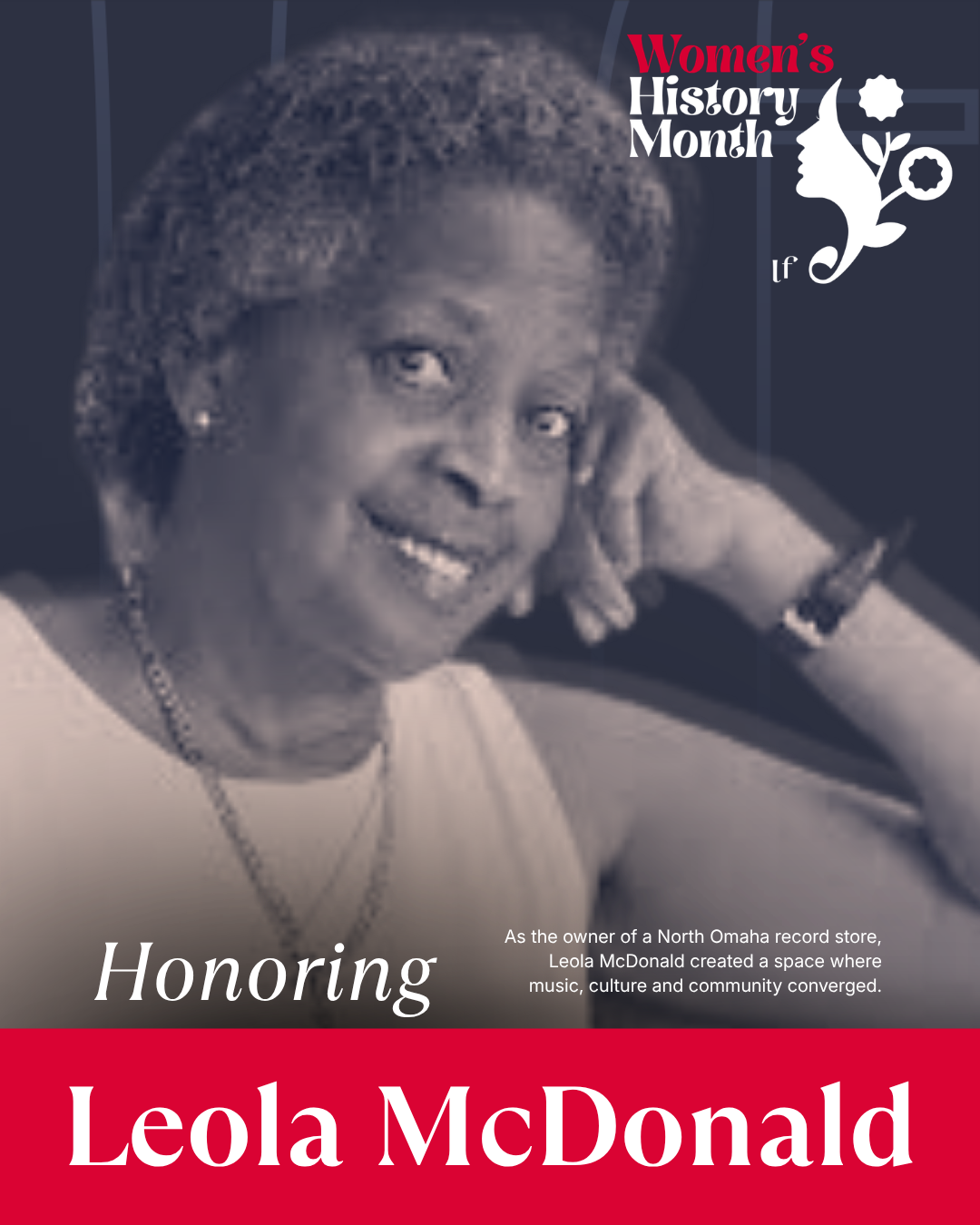
In North Omaha, McDonald owned and operated a record store located near North 24th Street, historically the center of the city’s Black business and cultural district. Her shop, often cited at 2402 North 24th Street, sat within a corridor known for its concentration of locally owned businesses, music venues and gathering spaces.
Her store became a place where residents could access music that reflected their experiences and identities—sounds that were not always centered in mainstream outlets.
Operating a record store required more than inventory. It meant understanding what people wanted to hear before they asked for it. McDonald curated selections that reflected both national artists and the tastes of the local community, contributing to how music circulated within Omaha.
Her store functioned as a gathering place. Customers returned regularly, not only for new releases but for conversation and connection. In an era before digital streaming, record stores played a central role in shaping how music was discovered, shared and remembered.
McDonald’s presence as a Black woman business owner in North Omaha also carried broader significance. Small businesses in the area were often closely tied to community identity, and ownership represented both economic participation and local investment.
Through her work, McDonald contributed to a network of neighborhood institutions, businesses that supported not only commerce, but culture. Her store helped sustain the visibility of genres like rhythm and blues, jazz and gospel within the local landscape.
While many independent record stores declined with shifts in the music industry, their impact remains tied to the communities they served. In North Omaha, spaces like McDonald’s store were part of the social fabric, places where music was experienced collectively.
Her legacy is reflected in that role.
Not only as a business owner, but as a curator of sound and a steward of a space where people gathered around it.
Because before playlists and algorithms, there were places like hers.
And people who made sure the music kept playing.
