

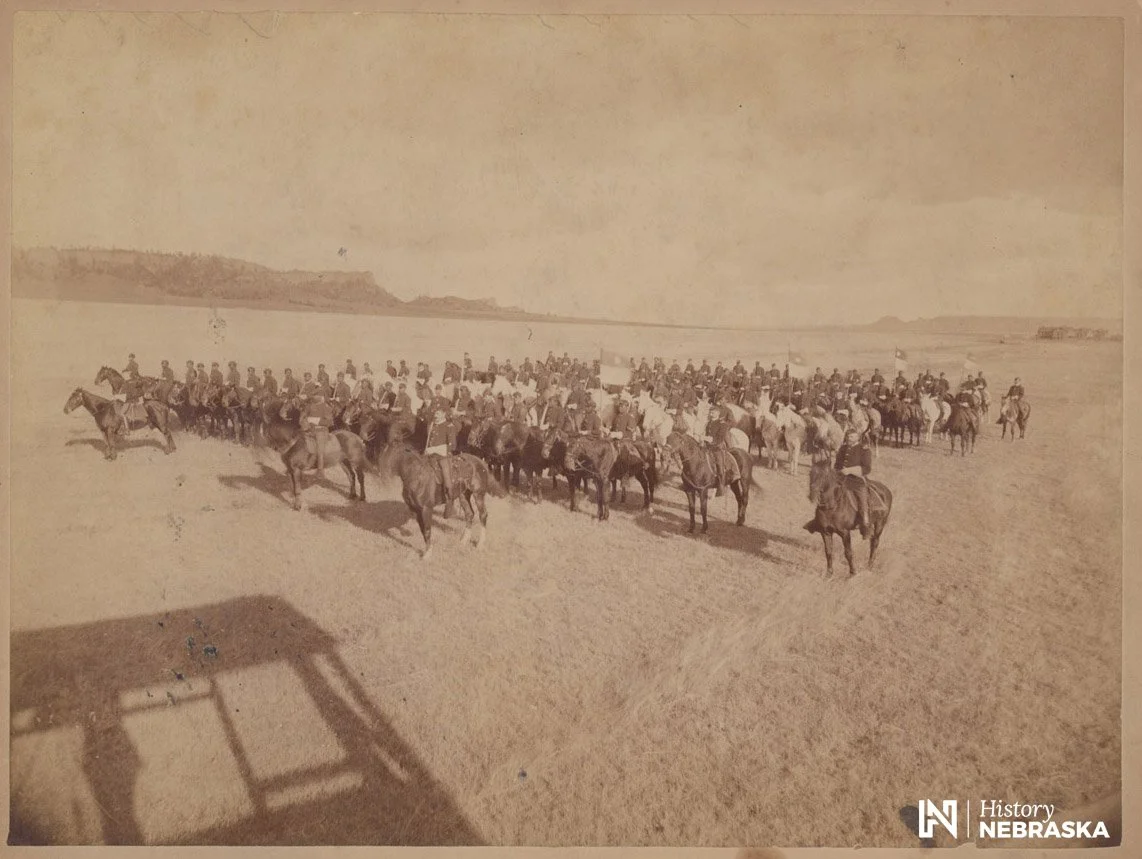
A Ninth Cavalry squadron on the drill field, circa 1892-93. Each of the four troops has its own guidon and its own color of horse. The shadow of the reviewing stand is visible in the foreground; Crow Butte and a few of the Fort Robinson buildings are visible in the right background. Photo Courtesy of History Nebraska.
The Great Plains Black History Museum is entering its next chapter with growing community engagement, new partnerships, and an upcoming exhibit that brings an often-overlooked part of Nebraska history into focus.
The History of the Buffalo Soldiers will be on display from Oct. 1, 2026, through Jan. 2, 2027, at the museum, 2221 N. 24th St. in Omaha. Sponsored by Mutual of Omaha, the exhibit will explore the service, struggles and legacy of the Black men and women associated with the Buffalo Soldiers, including their significant ties to Western Nebraska.
Executive Director Eric Ewing said the exhibit reflects the museum’s continuing commitment to connecting national Black history with the people, places and stories of Nebraska.
“As I always tell folks, when I make exhibits for the museum, I try to make that connection with Omaha or with Nebraska,” Ewing said. “You learn about the Buffalo Soldiers, but then you show that Omaha and Nebraska connection.”
Who were the Buffalo Soldiers?
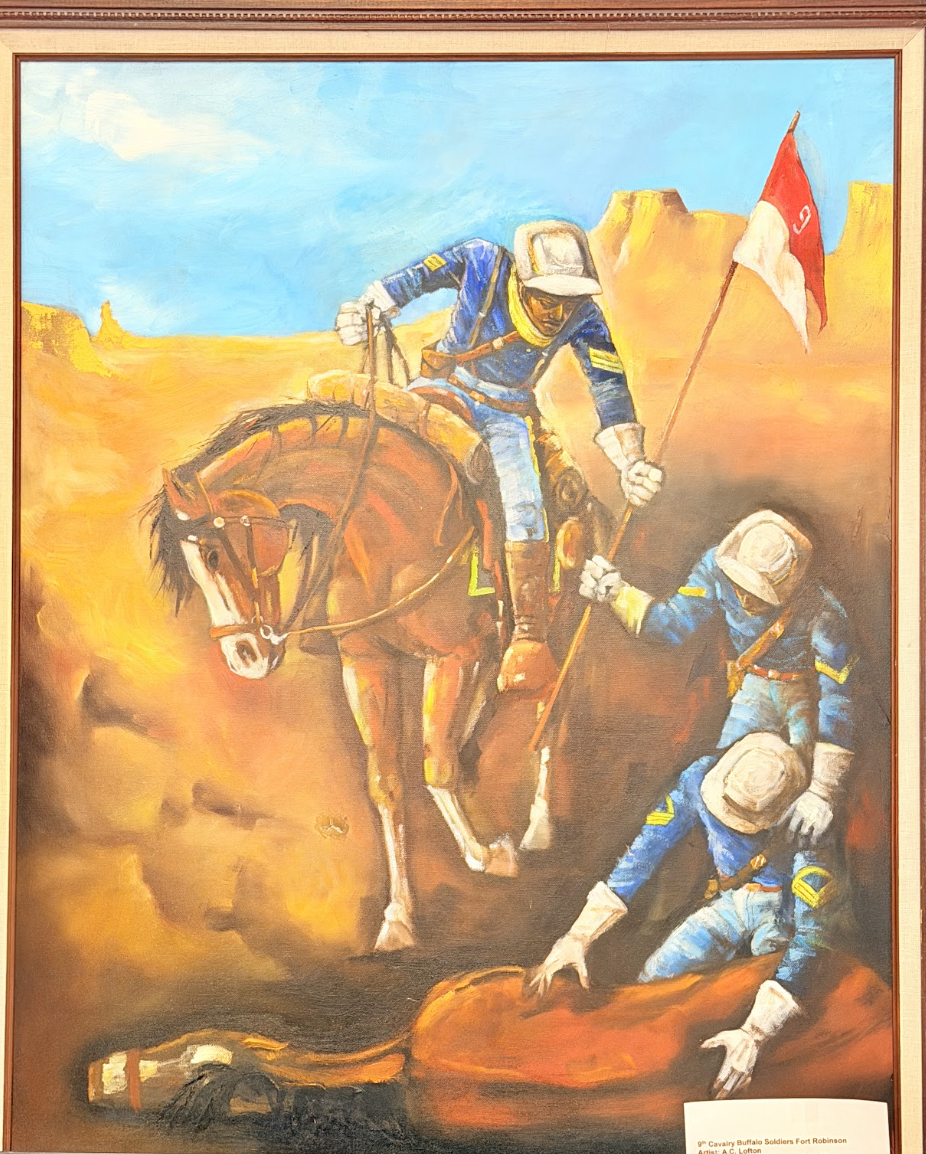
Following the Civil War, Congress passed legislation in 1866 establishing six all-Black regiments in the regular U.S. Army. Those units were later reorganized into four regiments: the 9th and 10th Cavalry and the 24th and 25th Infantry.
The soldiers became widely known as Buffalo Soldiers, a name believed to have originated among Native peoples. Historians continue to debate exactly which tribe coined the name and what it originally meant.
These soldiers served while the U.S. military remained segregated. They regularly endured racism, discrimination, and mistreatment from officers, fellow soldiers, and civilians.
Their history is also complicated. Buffalo Soldiers served in an Army carrying out the federal government’s westward expansion, which displaced Native nations and confined Indigenous people to reservations. Their story requires holding two realities together: Black soldiers pursued military service, economic stability, and citizenship in a country that denied them equality while also participating in campaigns that harmed Native communities.
Ewing said presenting that complexity honestly was essential while researching the exhibit.
“What I require is that it is actual and factual information, nothing to glamorize it and make it seem like everything was hunky-dory,” Ewing said. “Just tell the true history, and then I’ll be happy.”
Beyond military campaigns, Buffalo Soldiers constructed roads, installed telegraph lines, escorted travelers and mail, protected transportation routes, and served as some of the earliest guardians of lands that would later become national parks.
Nebraska’s Buffalo Soldiers
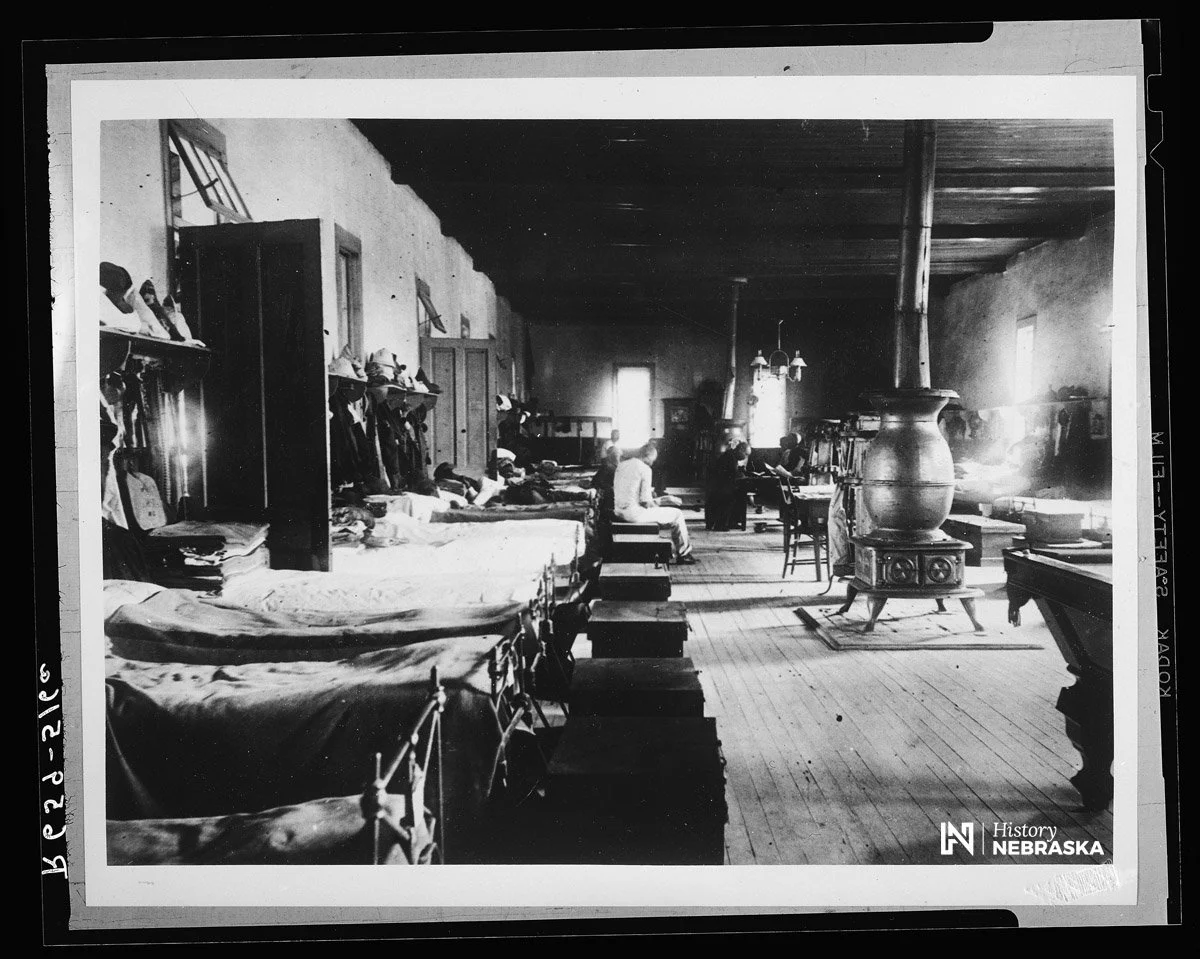
Interior of an 1887 adobe barracks at Fort Robinson. The all-black Ninth Cavalry lived in buildings that were identical to those of their counterparts in the all-white Eighth Infantry. Photo Courtesy of History Nebraska.
Nebraska holds an important place in this history.
According to the Nebraska State Historical Society, the 9th Cavalry was headquartered at Fort Robinson in Western Nebraska from 1887 to 1898. Members of the 9th and 10th Cavalry were stationed at the fort for approximately 18 years.
“The 9th and 10th Cavalry were stationed out in Western Nebraska,” Ewing said. “That is one of the connections we’re able to make through this exhibit.”
The soldiers helped construct and expand Fort Robinson, trained there, and participated in military operations throughout the region. They lived and worked in a deeply segregated environment where their uniforms did not shield them from racism.
Lt. Charles Young, the third Black graduate of the U.S. Military Academy at West Point, arrived at Fort Robinson in 1889. He would later become the first Black superintendent of a national park and one of the most prominent Black military officers of his time.
Lt. Henry Ossian Flipper also served at Fort Robinson. In 1877, Flipper became the first African American to graduate from West Point. He was commissioned as a second lieutenant and assigned to the 10th Cavalry.
Flipper’s military career was damaged by a racially charged court-martial and dismissal from the Army. His discharge was later changed to honorable, and President Bill Clinton granted him a posthumous pardon in 1999. The National Park Service recognizes Flipper as a trailblazer whose life reflected both the achievements of Black soldiers and the institutional racism they faced.
Ewing said the exhibit will include documents related to the Omaha advocates who worked to have Flipper’s discharge status changed, including Great Plains Black History Museum founder Bertha Calloway.
“We have some documents that will be displayed for folks to see,” Ewing said. “Then you learn about the Buffalo Soldiers, but you also see that Omaha and Nebraska connection.”
Another Nebraska-connected story is that of Caleb Benson. Benson served with both the 9th and 10th Cavalry and was stationed at Fort Robinson. After an injury affected his ability to reenlist, he established a homestead near the fort. He eventually completed approximately 30 years of military service and retired as a first sergeant.
Benson later returned to Nebraska and is buried at Fort McPherson National Cemetery near Maxwell. His story is preserved by the National Park Service.
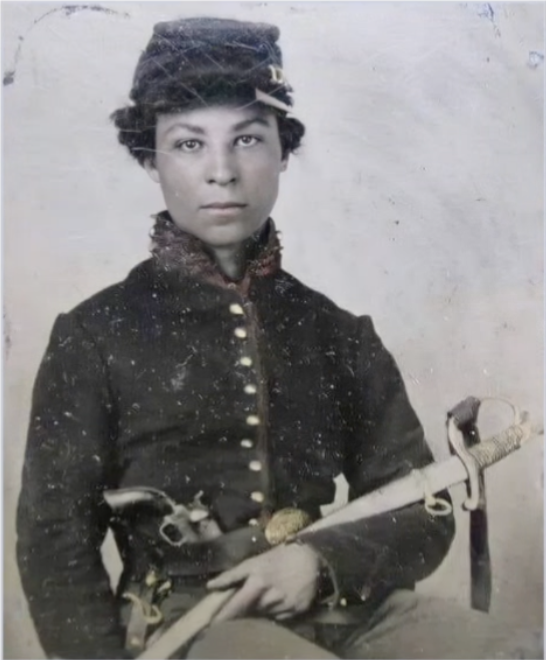
Click here to read the remarkable story of Cathay Williams (left), the only known documented woman to serve as a Buffalo Soldier.
These individuals represent only a portion of the Buffalo Soldiers who lived, trained, and served in Nebraska.
Eric said: “We’ve got a painting of the Buffalo Soldiers in the museum, and I said, ‘I want to create an exhibit.’”
The upcoming exhibit arrives during a period of significant momentum for the Great Plains Black History Museum.
The museum recorded 13,530 interactions in 2025. As of its September planning meeting, it had already reached 14,153 interactions in 2026.
Ewing emphasized that the museum measures its impact beyond the number of people who physically enter its building.
“I count interactions, not just visits into the building,” Ewing said. “If we go out and give a presentation to a group of more than 100 people, we are still informing people about who we are and what we do.”
That growth is about more than attendance numbers. It means expanding the museum’s ability to research, preserve, and share Black history throughout Omaha, Nebraska, and the greater Great Plains region.
The Buffalo Soldiers exhibit embodies that mission. It brings forward stories of military service and perseverance while creating space for honest conversations about racism, citizenship, westward expansion, and the experiences of Native nations.
Most importantly, it reminds visitors that the history of the Buffalo Soldiers is not disconnected from Nebraska.
It is Nebraska history.
Plan your visit
The History of the Buffalo Soldiers will be displayed from Oct. 1, 2026, through Jan. 2, 2027, at the Great Plains Black History Museum, 2221 N. 24th St. in Omaha.
The museum is open Wednesday through Saturday from 1 to 5 p.m. Admission is free, and donations are encouraged.
Visit the Great Plains Black History Museum to learn more about the exhibit, upcoming programs, and ways to support the museum.