

Aaron Douglas: The Artist Who Painted Black History into the American Imagination
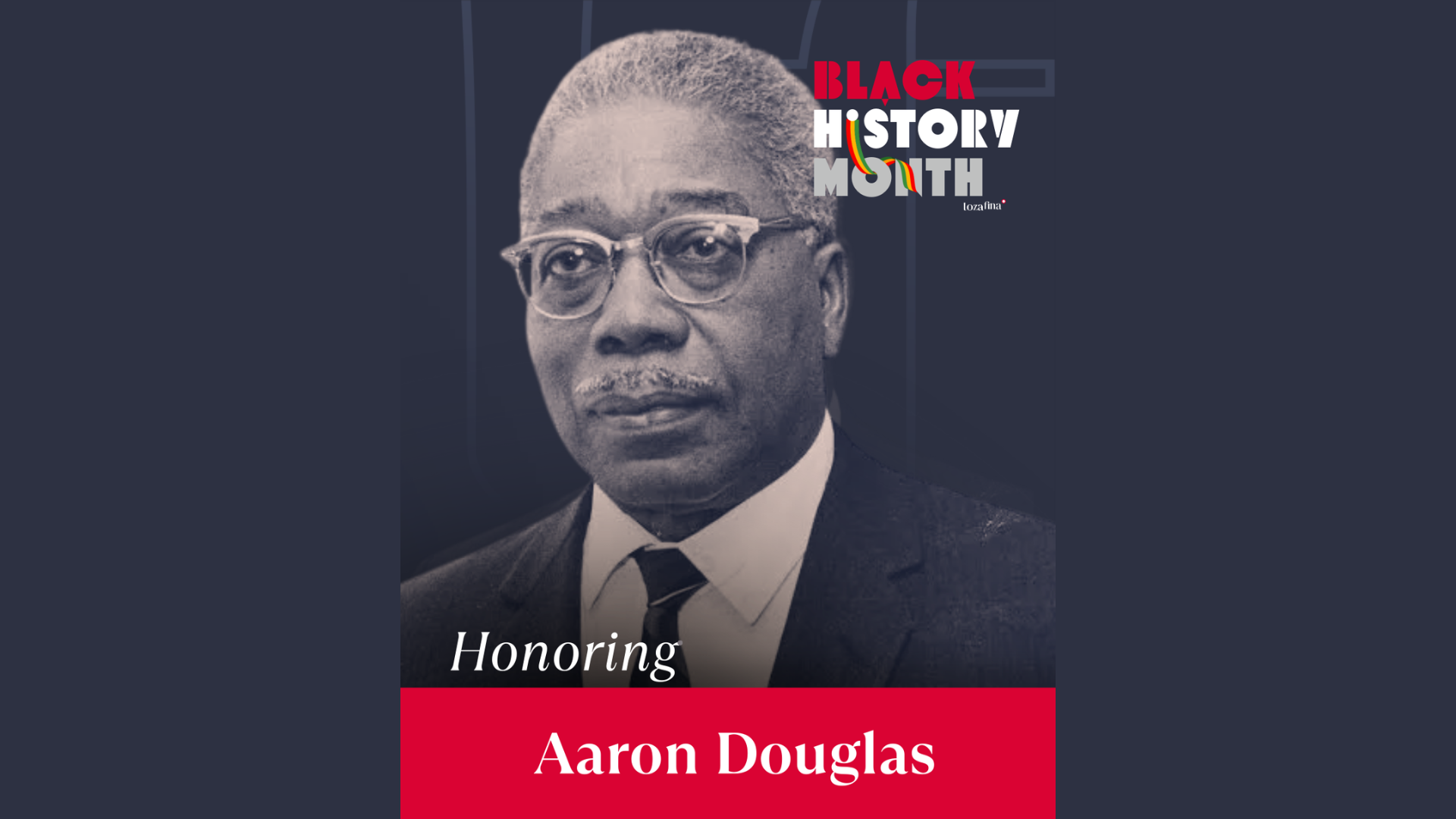
Aaron Douglas
Legacy Maker | Art, Education, and Cultural Power
Story by Aniya Porter
Aaron Douglas believed art could do more than decorate walls; it could challenge injustice, reclaim identity, and shape a people’s future. Born on May 26, 1899, Douglas emerged as one of the most influential visual artists of the 20th century and a defining creative force of the Harlem Renaissance. His work helped give visual language to Black life, history, and resistance at a time when those stories were routinely erased.
Douglas built his career through bold murals and illustrations that confronted segregation, racism, and inequality head-on. Drawing from African and African American visual traditions, he developed a distinct style, layered silhouettes, rhythmic movement, and radiant light, that centered Black dignity and ancestry. His art was unapologetically political and deeply cultural, insisting that Black history belonged not on the margins, but at the center of American consciousness.
Committed to expanding access and opportunity, Douglas helped pave the way for future generations through his involvement with the Harlem Artists Guild, advocating for Black artists to enter the public arts sphere and receive recognition long denied. But his impact did not stop with his own work.
In 1944, Douglas founded the Art Department at Fisk University, transforming the institution into a vital incubator for Black artistic talent. As a professor and later chairman, he mentored countless students, emphasizing discipline, cultural grounding, and the responsibility artists carry to their communities. He taught at Fisk until his retirement in 1966, leaving behind a legacy as powerful in the classroom as it was on canvas.
Notably, Douglas earned his Bachelor’s degree in Fine Arts from University of Nebraska–Lincoln, connecting his journey to the Midwest as well as the national stage.
Aaron Douglas’ legacy lives on through the artists he inspired and the truths his work continues to tell: that art is memory, movement, and a blueprint for liberation.
Know a Black community leader whose story should be told? Nominate them by emailing office@lozafina.com.
