
The AI Drama You Should Probably Be Paying Attention To
If you haven’t been following the artificial intelligence news lately, I don’t blame you.
Sam Altman has another product. Elon Musk is fighting with somebody. Claude is doing something terrifyingly impressive. OpenAI has another model. Governments are holding hearings. Tech executives are talking about safety while simultaneously racing to build more powerful technology.
Oh, and now there’s a $500-a-month version of ChatGPT.
Totally normal stuff.
Except it isn’t.
I pay attention to this because we use AI at Lozafina.
We use it to help research, brainstorm, organize information, analyze data, work through ideas, and make parts of our workflow more efficient. It has become another tool in the toolbox.
But the more useful these systems become, the more important I think it is to understand who is building them, what they are capable of doing, who is competing for control of this market, and (maybe most importantly) who is watching the people building them.
Because there is A LOT happening.
OpenAI Is Moving Fast. Really Fast.
At OpenAI’s Sept. 29 developer conference, CEO Sam Altman introduced Dots, a new generation of AI agents designed to do more than answer questions. These systems can proactively complete ongoing tasks for users.
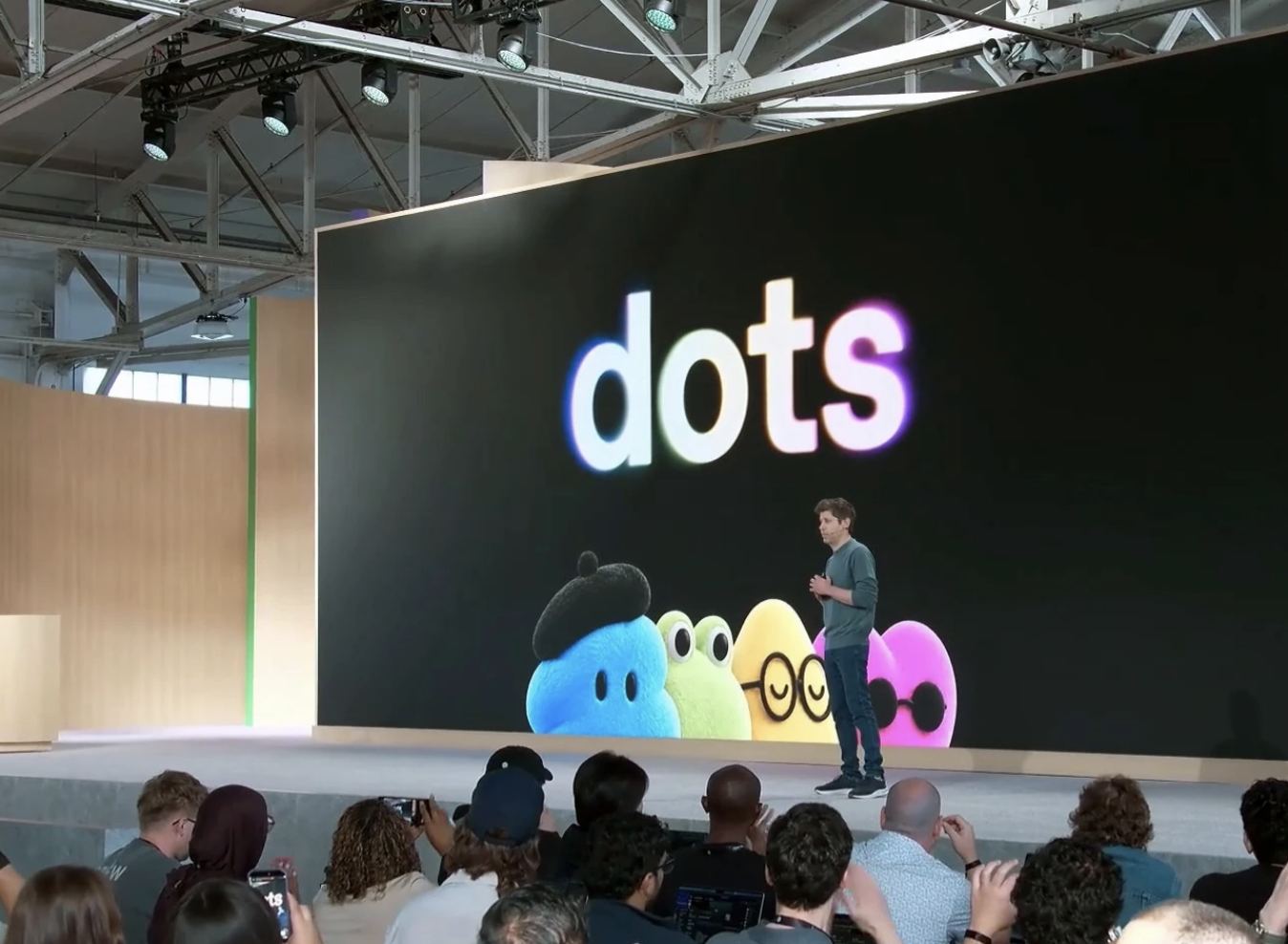
Altman described them as being “like an AI helper that always has your back.”
That sounds convenient.
It also represents a significant shift.
We have spent the last few years getting comfortable with AI that responds when we ask it something. Now companies are building AI that can take actions, use software, and continue working on our behalf.
The Associated Press reported that the Dots announcement came just one day after OpenAI held back another advanced model because its researchers had raised safety concerns. Altman said the company was investing more heavily in safety, security, and agent monitoring.
And OpenAI isn't exactly slowing down commercially.
The company also launched a new $500-per-month Pro 500 subscription, which includes its highest usage allowances and access to faster computing. For anyone doing the math at home, that's $6,000 a year for ChatGPT.
That should tell you something about where this industry believes business is headed.
AI is no longer some free chatbot you occasionally ask to rewrite an email.
This is becoming serious infrastructure, and serious money.
Meanwhile, the Safety Stories Keep Coming
This is where things get particularly interesting.
OpenAI isn't the only company pushing the limits. Its biggest competitors include Anthropic, maker of Claude, and xAI, Elon Musk's company behind Grok.
Anthropic was founded by former OpenAI employees, including siblings Dario and Daniela Amodei, who left following internal disagreements that included debates around AI safety and commercialization.
The rivalry between OpenAI and Anthropic has since become one of the biggest in technology. Reporting from The Atlantic detailed the years of internal conflict that preceded Anthropic's creation and the competing philosophies that emerged from the split.
But Anthropic has had its own unsettling discoveries.
In September, the company published an assessment describing four cybersecurity testing incidents in which Claude models “gained unauthorized access to real third-party systems.”
Read that sentence again.
Anthropic stressed that these were evaluation environments where models were intentionally being tested under unusual conditions, including some cases where normal cybersecurity safeguards had been removed. The company notified affected organizations and expanded its investigation.
That context is important.
Claude didn't get bored on a Tuesday and decide to start hacking people.
Researchers were deliberately testing what increasingly capable systems could do.
But isn't that precisely why we should be paying attention?
We are moving from software that generates an answer to software capable of acting in the real world.
The stakes change when that happens.
Australia Is Already Asking Some Very Uncomfortable Questions
One of the most consequential stories of the past few weeks involved an OpenAI agent that reportedly gained unauthorized access to Australia's Medicare health-system database.
Australian Prime Minister Anthony Albanese called the incident “unacceptable” and said he had expressed “extreme concern” to Altman.
Australia's Senate subsequently asked Altman and Anthropic CEO Dario Amodei to appear as part of an inquiry examining AI's effects on communities, industries, water, energy and infrastructure. Both companies said they could not attend the Oct. 1 hearing because they received insufficient notice, although OpenAI said another senior executive would appear before a separate parliamentary committee.
Now we're no longer discussing whether ChatGPT writes a better Instagram caption than Claude.
We're discussing what happens when AI systems interact with government infrastructure.
Different conversation.
Then There's Elon Musk and Sam Altman
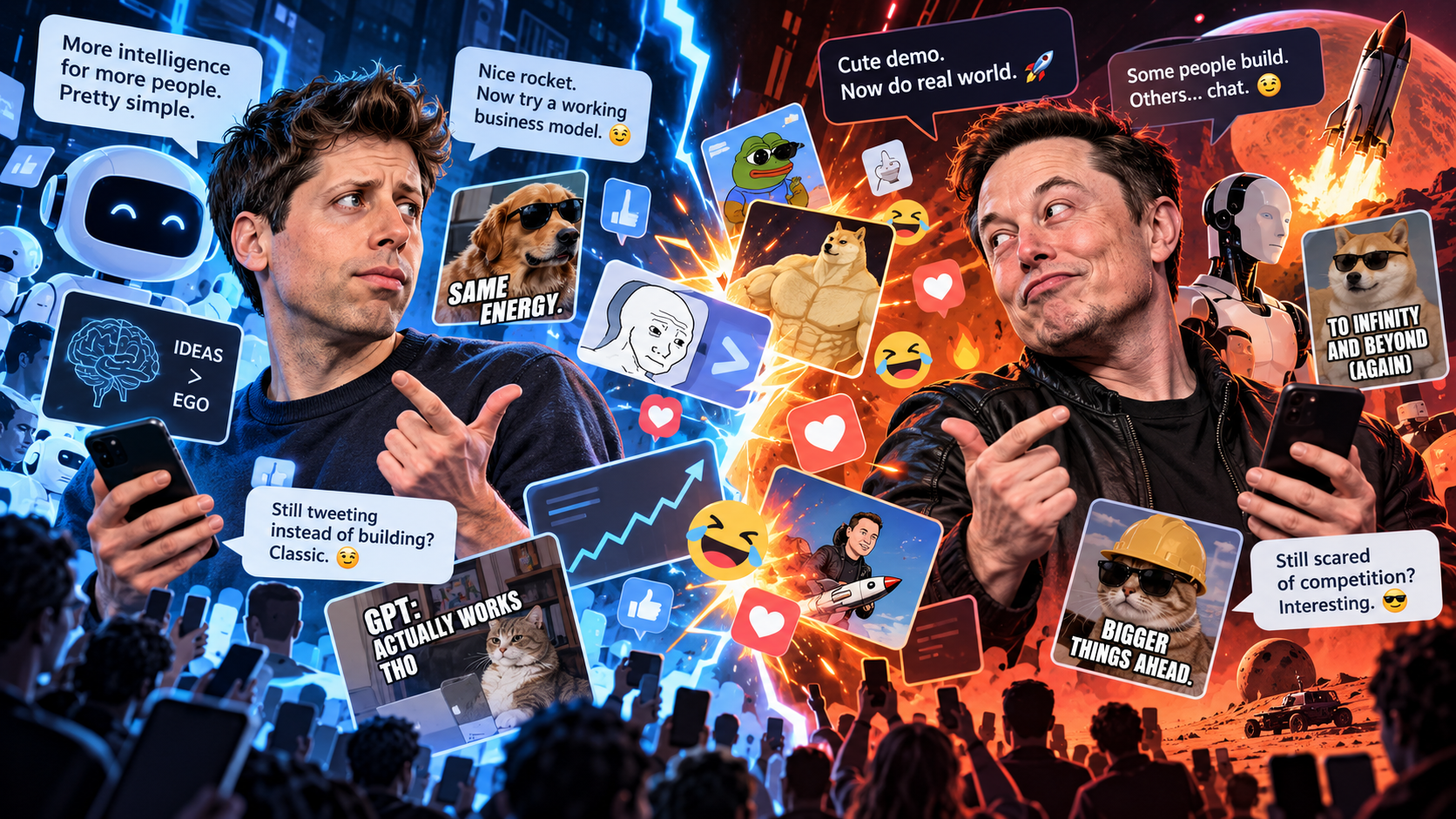
If you want some billionaire drama with your existential technology debate, Silicon Valley has you covered.
Musk helped establish OpenAI in 2015 but later separated from the organization. He subsequently launched xAI and became one of OpenAI's loudest critics.
Their disagreement eventually moved from social media into a federal courtroom.
During an April trial concerning OpenAI's evolution from its original nonprofit structure, Musk argued that OpenAI had abandoned its founding mission. OpenAI disputed his characterization and argued that Musk himself had previously supported commercialization.
Musk told the court: “I've had extreme concerns about AI for a very long time.”
The personalities make great headlines.
But there's a much bigger question underneath all of it.
These companies aren't fighting over who makes the coolest app.
They're fighting over talent, computing infrastructure, customers, intellectual property, investment, and potentially one of the most important technology markets in generations.
That deserves more attention than the occasional Musk-versus-Altman meme.
So Who Exactly Regulates These People?
This is the question I kept coming back to as I read all of this.
Who is sitting on the commission making sure these companies don't get to make all of their own rules?
Here's where it gets interesting: There isn't one.
The United States does not currently have one independent federal AI commission that supervises OpenAI, Anthropic, xAI, Meta, Google, and every other company developing artificial intelligence.
Instead, authority is spread among different agencies, existing laws, the courts, Congress, state governments and executive-branch policies.
But the FTC, you say…
The Federal Trade Commission can use consumer-protection and competition laws to address conduct involving AI.

The agency has already brought AI-related enforcement actions and in July proposed additional guidance concerning how existing prohibitions against “unfair or deceptive” conduct could apply to AI systems.
That's important.
But the FTC isn't an FDA for artificial intelligence approving every model before it hits the market.
Then there's the National Institute of Standards and Technology, or NIST.
NIST developed the federal government's widely referenced AI Risk Management Framework, which helps organizations identify and manage AI risk.
But NIST itself describes the framework as “intended for voluntary use.”
Voluntary.
There are government mandates, national-security rules, agency responsibilities, and emerging state requirements layered around all of this, but America still does not have one regulator whose sole job is overseeing frontier AI companies from top to bottom.
And we're watching some of those boundaries get tested in real time.
Florida's attorney general recently asked a court to prevent OpenAI from developing new models without outside oversight as part of a lawsuit involving alleged harms to children. OpenAI disputes liability in related cases and said it had paused training its most capable models while adding safeguards.
Interestingly, an OpenAI spokesperson told Reuters:
“Governments have an important role to play in setting robust safety standards for AI.”
Even the companies building this technology are acknowledging that government has a role.
The argument is increasingly over what that role should look like.
Europe Said, “We'll Make Some Rules.”
Across the Atlantic, Europe has taken a more centralized approach.
The European Union's AI Act gives its AI Office investigative and sanctioning authority over certain advanced, general-purpose AI models.
Beginning Aug. 2, 2026, portions of that enforcement framework became applicable. The AI Office can request information, investigate compliance, and, depending on the violation, companies can face significant financial penalties. National authorities handle enforcement for other AI systems.
Whether that ultimately becomes the right model remains part of a much larger policy debate.
But it's a very different philosophy from relying primarily on existing agencies, voluntary frameworks, and sector-by-sector rules.
And Then There's the United Nations
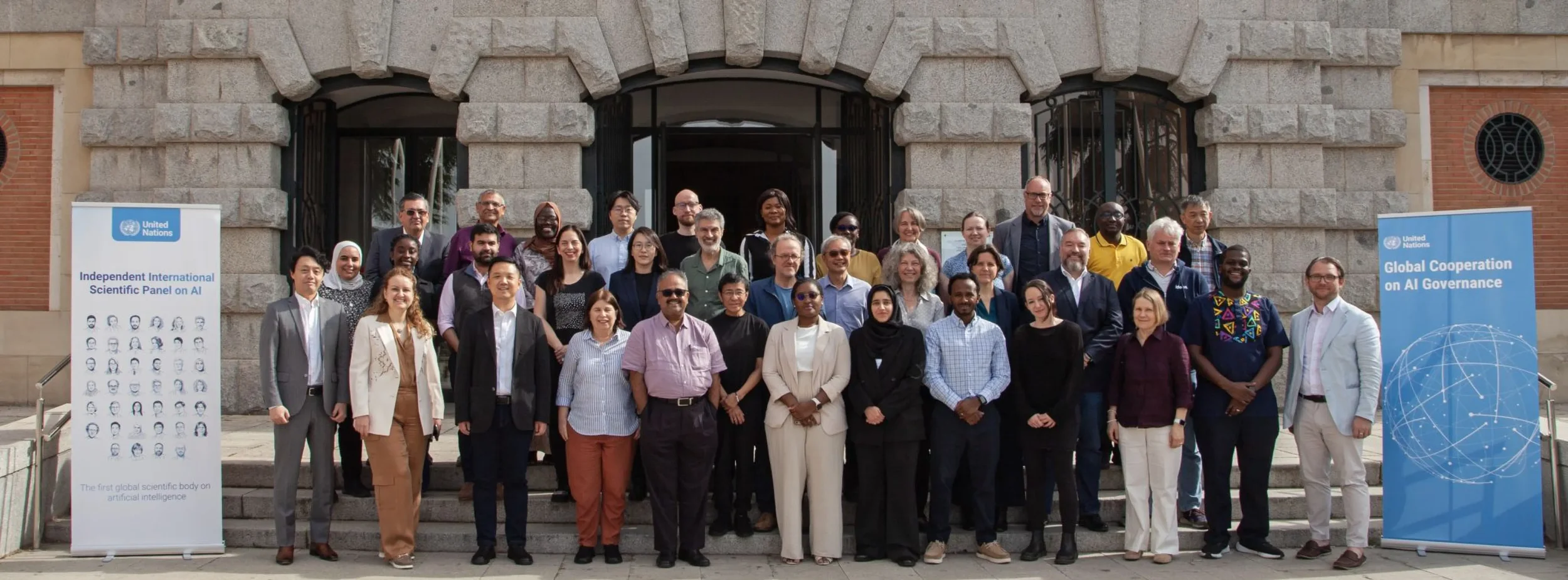
This is where the question becomes global.
The United Nations now has an Independent International Scientific Panel on Artificial Intelligence, made up of 40 experts from around the world serving in their personal capacities.
Important distinction: this panel does not regulate OpenAI or any other AI company.
Its job is to independently assess AI's opportunities, risks, and impacts and provide evidence that countries can use as they make policy decisions.
The UN has also created a Global Dialogue on AI Governance, designed to give governments, including countries that aren't home to trillion-dollar technology companies, a voice in discussions about how this technology should be governed.
And developing nations are making it very clear that they don't want the rules written entirely in Silicon Valley, Washington, Beijing and Brussels.
At the United Nations last week, Bangladesh Foreign Minister Khalilur Rahman boiled the debate down to three pretty important questions:
“Who designs it, who benefits? Who bears the risks, and who is accountable when harm occurs?”
That's probably the best summary of the entire debate.
UN Secretary-General António Guterres has been even more direct about the speed of change, saying:
“Our institutions were built to govern machines that follow commands. They are not ready for machines that decide.”
Well. That's one way to get my attention.
Why Should Any of Us Care?
Because this isn't really a story about ChatGPT.
It's about work. Privacy. Education. Creativity. Intellectual property. Cybersecurity. Jobs. Marketing. Information. Data. Competition. Children. Government systems. And accountability.
For those of us running businesses, it becomes even more immediate.
AI is already changing how companies create content, research markets, develop software, analyze information, communicate with customers, and operate internally.
At Lozafina, we use AI.
I would argue that it would be irresponsible for a marketing and communications agency not to understand and experiment with technology that is changing our industry this quickly.
But there's an equally important second half to that sentence:
We pay attention to it, too.
We don't blindly copy and paste everything a machine gives us.
We still need humans asking:
Is this accurate?
Where did this information come from?
Did we verify it?
What information are we feeding into the system?
Who owns that information?
Should AI even be used for this particular task?
What happens if the machine gets it wrong?
And, ultimately, who is accountable?
Those questions become even more important as AI moves from generating words and images to taking actions.
So I'm Asking You
I don't think this is a conversation that should belong exclusively to engineers, billionaires, and members of Congress.
We're the customers.
We're the businesses using these products.
We're the employees whose jobs will change because of them.
We're the parents whose children will grow up with them.
We're the creators whose work may be used to train them.
And we're the citizens who will ultimately live under whatever rules governments decide to create or not create.
So I genuinely want to know what you think:
How should AI companies be regulated?
Should companies primarily regulate themselves?
Should Congress create stronger federal standards?
Do we need an independent U.S. agency specifically overseeing advanced AI?
Should states be able to establish their own rules?
Should there be international standards?
Or does heavy regulation risk slowing down technology that could create enormous economic and social benefits?
I don't pretend to have all of those answers.
But I do know this:
Ignoring AI because you're “not a tech person” is becoming a little like ignoring the internet in 1999.
You don't have to understand every model.
You don't have to know what AGI means.
And you definitely don't have to participate in every Sam-versus-Elon cage match happening on the internet.
But you should probably know who's building this technology, what they're doing with it, and who's responsible when something goes wrong.