

Great Plains Black History Museum Brings HBCU Greek Collaborative Community Event to Omaha
Story by: Itzel Davila Torres
Nebraska may not be home to a Historic Black College or University (HBCU), but Omaha has a strong community of HBCU alumni, students, and supporters who carry those institutions’ traditions and sense of pride with them.
The Great Plains Black History Museum will bring that community together on Oct. 10 along historic North 24th Street for the sixth annual HBCU Greek Collaborative Community Event. Omaha’s own celebration of the spirit and traditions associated with HBCU homecoming will be held from noon to 4 p.m.
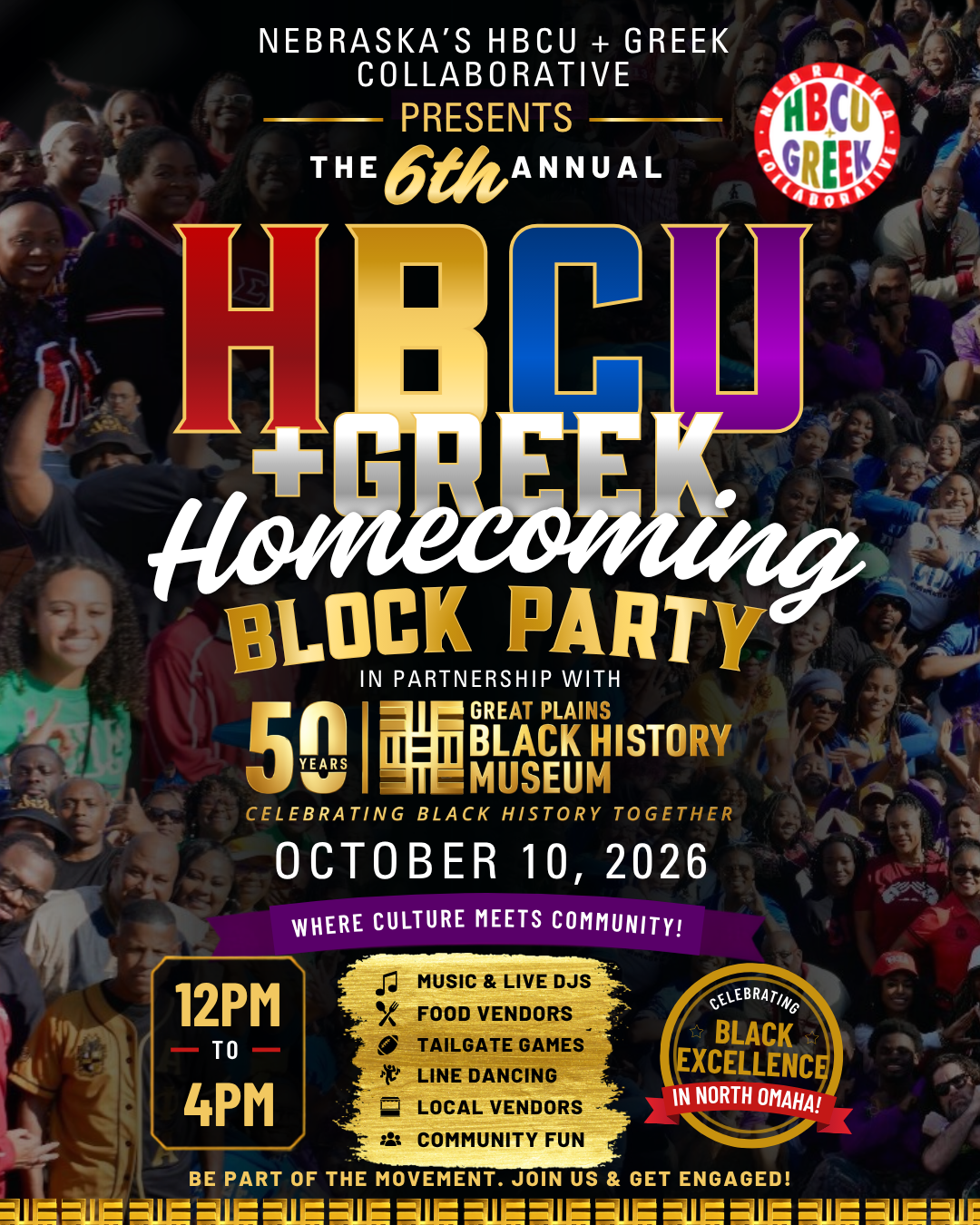
This year’s event is especially meaningful as the museum celebrates 50 years of preserving and sharing the histories, achievements, and experiences of Black people throughout Omaha and the Great Plains.
Historically Black Colleges and Universities (HBCUs) were established primarily before the Civil Rights Act of 1964, when segregation and discriminatory policies prevented many Black Americans from accessing higher education. HBCUs created pathways to education and opportunity while nurturing generations of leaders, scholars, artists, entrepreneurs, and change makers. Today, these institutions welcome students of all backgrounds while continuing their historic mission and cultural legacy.
“We should not have to leave Nebraska to experience the power, pride and tradition of HBCU culture,” says Dorothy Johnson, a board member of the Great Plains Black History Museum and HBHC Greek Collaborative coordinator.
Although Nebraska does not have an HBCU, it is home to HBCU graduates and members of the Divine Nine, the nine historically Black fraternities and sororities that make up the National Pan-Hellenic Council. These organizations have long traditions of scholarship, leadership, service, and community advocacy.
Attendees can expect an immersive experience featuring music, school colors, stepping, strolling, and expressions of HBCU pride. Stepping is a synchronized performance tradition that combines movement, rhythm, and sound, while strolling is a coordinated line dance associated with historically Black Greek-letter organizations. It also gives community members who did not attend an HBCU an opportunity to learn about and respectfully experience the pride, belonging, and traditions these institutions represent.
As Johnson says it, “our culture is alive, our legacy is strong, and our story is still unfolding.”
