

Deb Fischer: From Ranchland to the U.S. Senate
The work begins far from Washington.
On a ranch in Nebraska’s Sandhills, decisions are practical and immediate, land, water, livestock, weather. It is a place where policy is not abstract. It shows up in daily operations, in what can be sustained and what cannot.
Deb Fischer’s political career began in that environment.
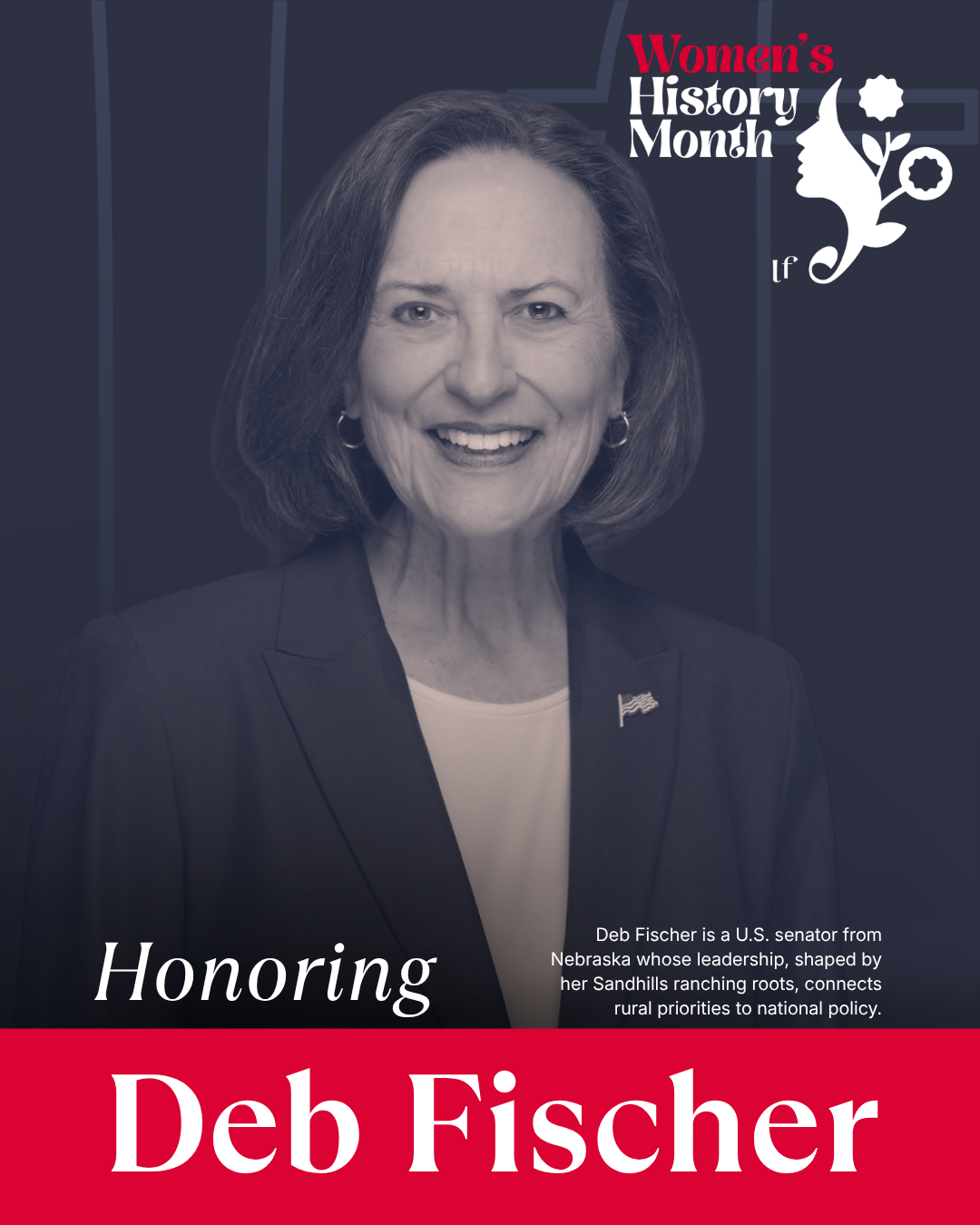
Born March 1, 1951, Fischer grew up in Lincoln, Nebraska, and later attended the University of Nebraska–Lincoln, where she earned a degree in education. She moved with her family to a ranch near Valentine, Nebraska, where she became involved in local and state issues, particularly those tied to agriculture, natural resources and rural infrastructure.
Her entry into public office came through the Nebraska Legislature. In 2004, Fischer was elected to represent the 43rd District in the Nebraska Unicameral, where she served two terms. During her time in the Legislature, she worked on transportation policy, natural resources and agricultural issues, including chairing the Transportation and Telecommunications Committee.
In 2012, Fischer entered the race for the United States Senate. Her campaign, initially considered an underdog effort, gained momentum in the primary and carried through the general election. She was elected that year, becoming the first woman from Nebraska to win a full term in the U.S. Senate.
Fischer assumed office in January 2013. In the Senate, her work has included roles on committees related to armed services, commerce, environment and public works. Her legislative focus has included national defense, infrastructure, agriculture and telecommunications, issues that connect federal policy to both rural and urban communities.
She has since been reelected, continuing to represent Nebraska at the federal level.
Fischer’s election marked a milestone in the state’s political history, expanding representation at a level where Nebraska had not previously elected a woman to a full Senate term.
Her career reflects a trajectory that moves from local experience to national policymaking, shaped by the realities of rural life and the responsibilities of federal office.
In Washington, policy debates often unfold at a distance.
But for Fischer, the work remains tied to a place where decisions carry immediate weight—and where public service begins long before a vote is cast.
