

Captain Alfonza W. Davis: Omaha’s Tuskegee Airman Who Defied the Sky’s Limits
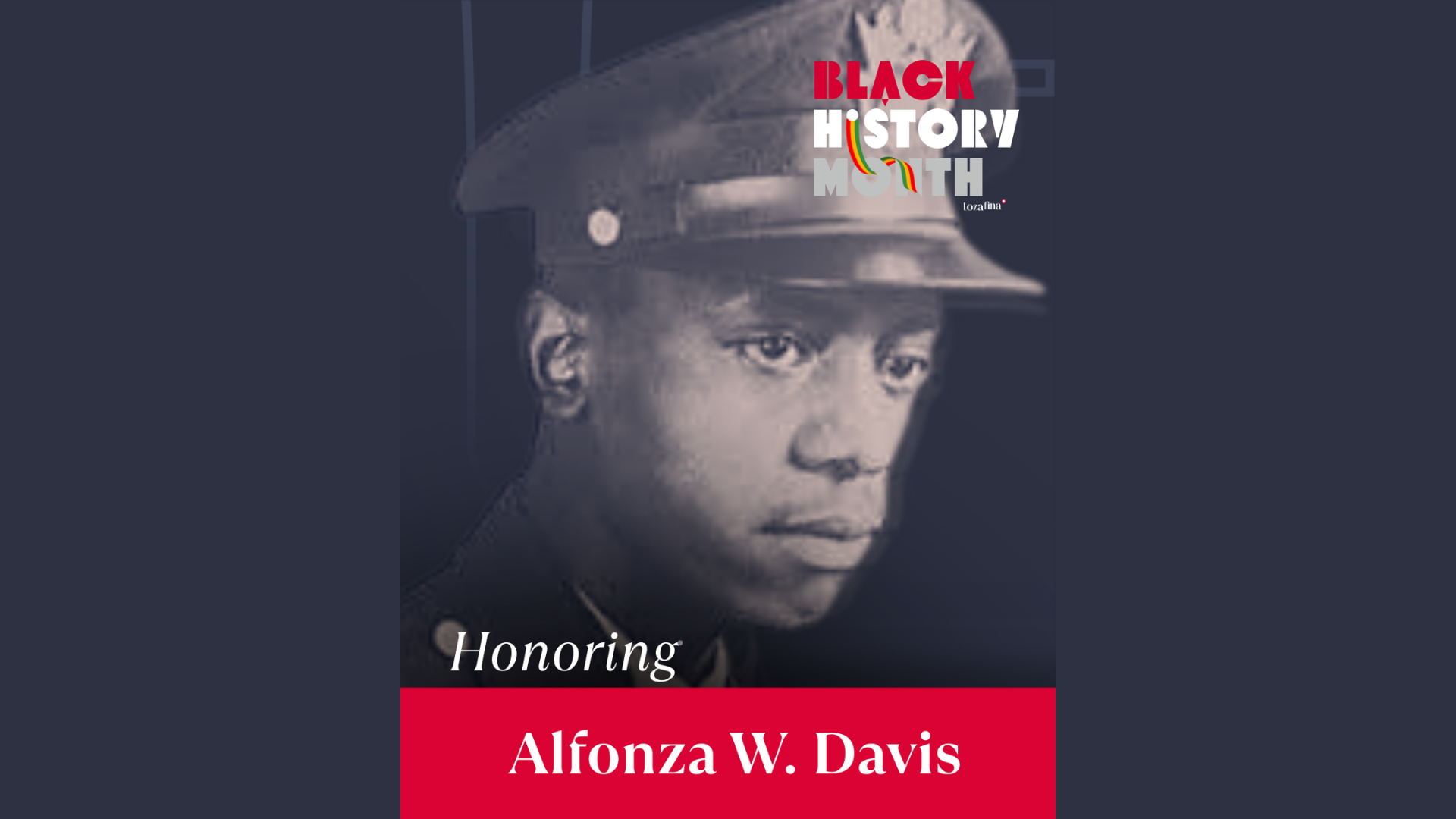
Alfonza W. Davis
Legacy Maker | Omaha, Nebraska
Story by Aniya Porter
Alfonza W. Davis embodies excellence forged through discipline, courage, and an unshakable belief in possibility.
Born on August 20, 1919, in Pensacola, Florida, Davis later made Omaha, Nebraska, his home after the death of his mother. It was in Omaha that his leadership and academic brilliance took root. In March 1937, he graduated as valedictorian from Omaha Technical High School, distinguishing himself early as a scholar of exceptional promise. That achievement earned him the First Annual University Scholarship awarded by the Alpha Eta chapter of Kappa Alpha Psi Fraternity, opening doors to higher education at Creighton University, where he earned a Bachelor of Science in Commerce in 1941.
In 1942, at a time when segregation limited opportunity and recognition, Davis answered a greater call and joined the U.S. Army Air Corps. He was selected for training at Tuskegee Army Airfield in Alabama, the groundbreaking program established to train the nation’s first Black military aviators. From July 1942 to March 1943, Davis trained among those who would become known as the Tuskegee Airmen, tasked not only with mastering flight but with disproving racist myths through excellence and precision.
Davis graduated at the top of his flight class, earning his pilot wings in March 1943 and becoming the first African American aviator from Omaha to do so at Tuskegee. His excellence extended beyond the cockpit. He received a medal for the highest rating in Moving Target Marksmanship and went on to serve as Squadron Commander of the 99th Fighter Squadron within the 332nd Fighter Group.
In combat, Captain Davis continued to lead with distinction. He was credited with one aerial victory in the Mediterranean Theater of Operations on July 16, 1944, and his service earned him some of the nation’s highest military honors, including the Purple Heart, Distinguished Flying Cross, and Distinguished Unit Citation (now known as the Presidential Unit Citation).
Captain Alfonza W. Davis’s legacy is one of brilliance under pressure and leadership in the face of exclusion. His life reminds Omaha, and the nation, that Black excellence has always soared higher than the limits placed upon it.
Know a Black community leader whose story should be told? Nominate them by emailing office@lozafina.com.
