

Ashley Graham: Redefining Who Gets to Be Seen
Backstage at a fashion show, the mirrors are lined with faces preparing to be seen.
For decades, those reflections followed a narrow standard, one that defined who belonged in fashion and who did not.
Ashley Graham stepped into that space and expanded it.
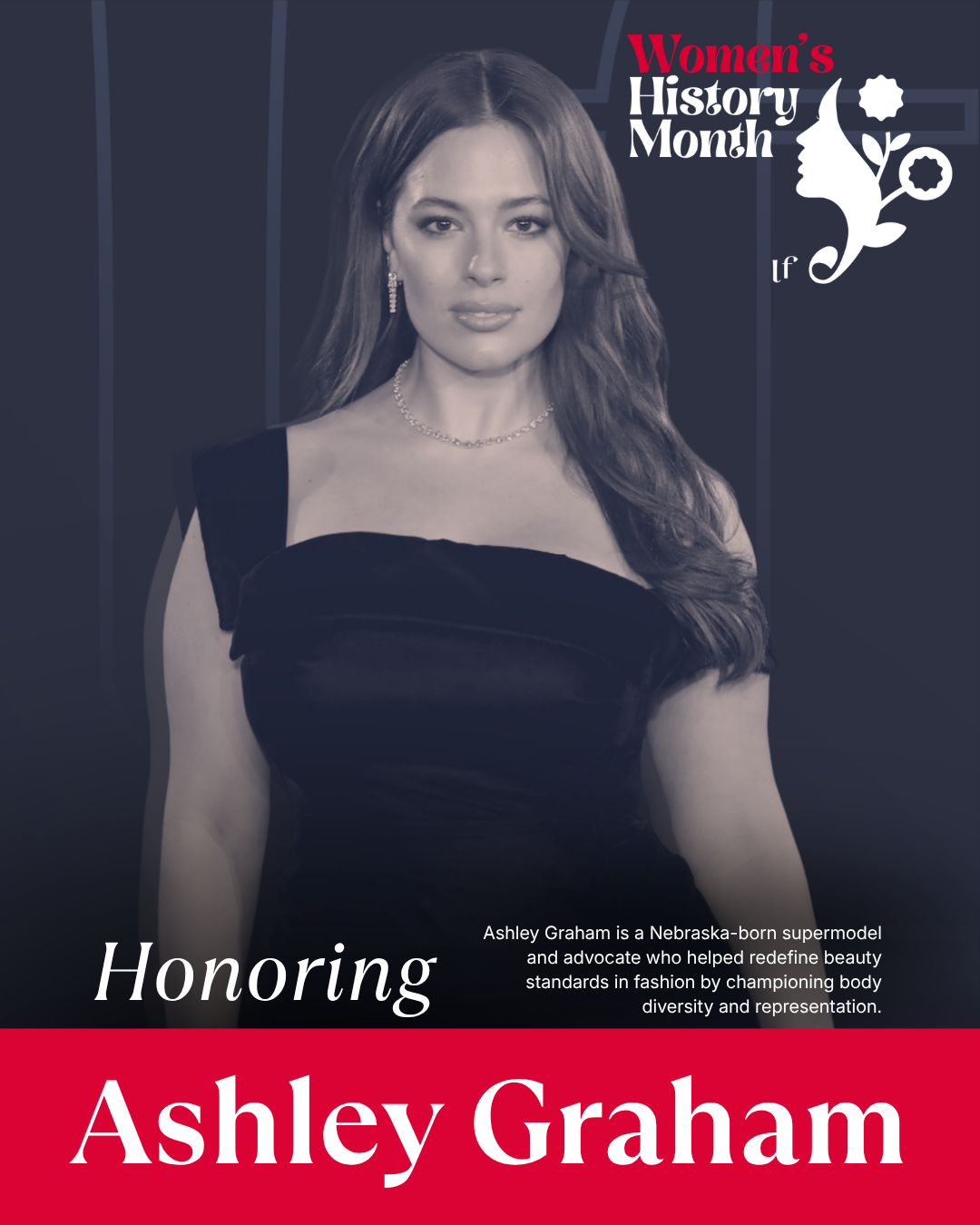
Born October 30, 1987, in Lincoln, Nebraska, Graham was discovered as a teenager and began modeling in her early years. She signed with a major agency while still in high school, entering an industry where size inclusivity was limited and opportunities for models outside traditional standards were rare.
Her early career included commercial modeling and catalog work, but her visibility expanded significantly in the 2010s as conversations around body image and representation began to shift.
In 2016, Graham became the first model size 14 and above to appear on the cover of the Sports Illustrated Swimsuit Issue, a milestone that brought national attention to both her career and the broader conversation around size diversity in media.
Her work has since included major runway appearances, international campaigns and magazine covers, positioning her as one of the most recognized models advocating for greater representation in the fashion industry.
Alongside her modeling career, Graham has been a vocal advocate for body acceptance and self-image. She has spoken publicly about industry standards, representation and the importance of expanding definitions of beauty, using platforms ranging from interviews and social media to published work, including her book A New Model: What Confidence, Beauty, and Power Really Look Like.
Her advocacy extends into media and television, where she has served as a host and judge on programs including America’s Next Top Model, further influencing how emerging talent is evaluated and presented.
Graham’s impact reflects a broader shift within the fashion industry, one that has increasingly, though unevenly, moved toward inclusivity in sizing, casting and representation.
Her career has intersected with cultural conversations about confidence, identity and visibility, particularly for women who have historically been excluded from mainstream fashion narratives.
Despite global recognition, Graham frequently references her Midwest roots, noting how her upbringing in Nebraska shaped her perspective and approach to her work.
Today, her presence extends beyond the runway.
It lives in campaigns that look different than they once did. In casting decisions that are broader than before. In conversations that continue to evolve about who gets to be seen—and how.
For Graham, the work has never been only about modeling.
It has been about visibility.
And who it makes room for next.
