

Alejandra Wells and the Power of Creating Space for Teen Connection
The table is covered in beads.
Bright colors. Letter blocks. Small charms shaped like hearts, suns and smiley faces. Around it, a group of teens sits shoulder to shoulder, heads down, hands moving, quietly creating something of their own.
At the center of it is Alejandra Wells, not standing apart, but sitting with them.
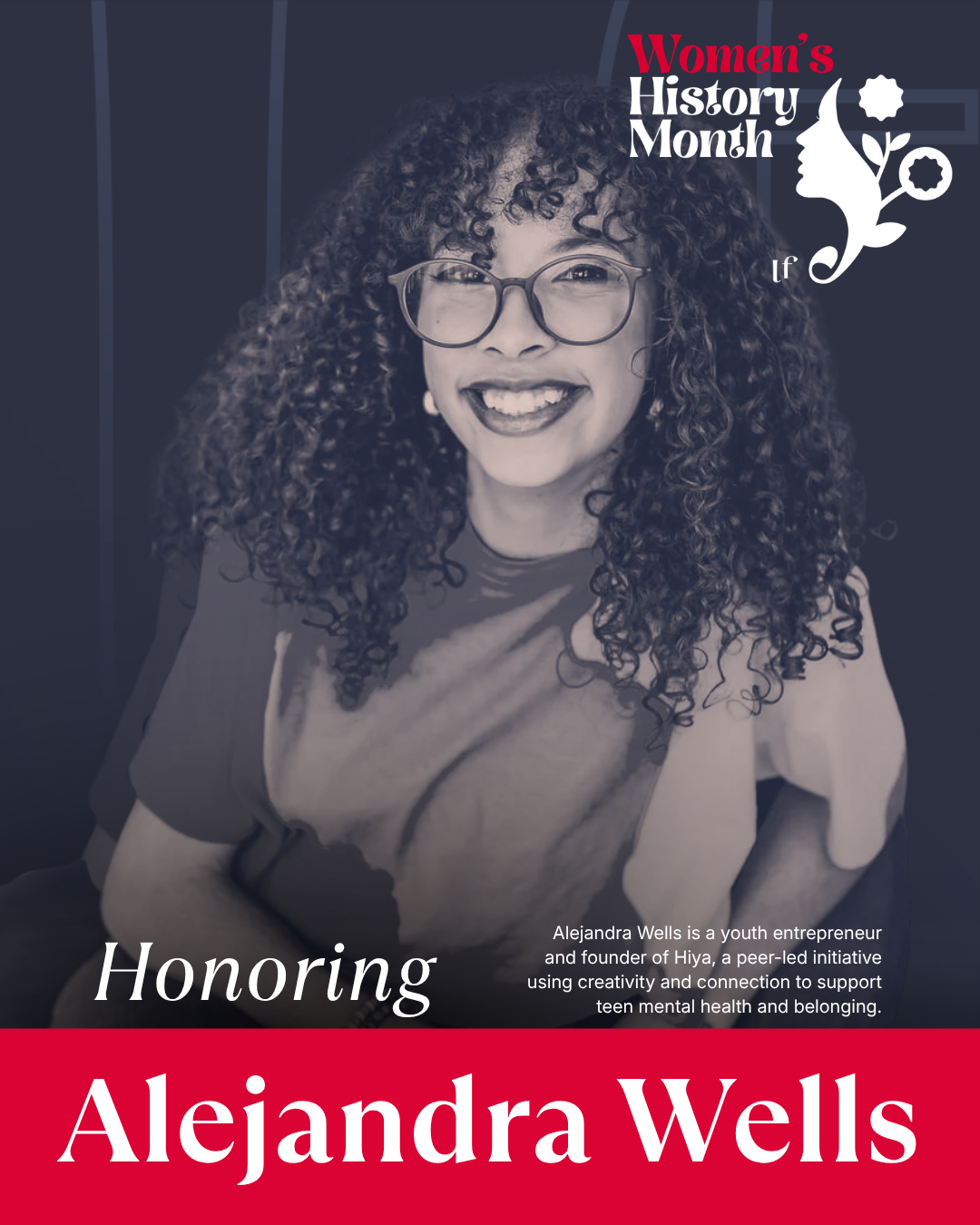
This is where her work begins.
Wells is the founder of GoShopHiya and The Hiya Foundation, a youth-led initiative focused on teen mental health, belonging and suicide prevention. Since its launch, Hiya has evolved into a platform that blends creativity with peer-to-peer support, reaching young people through workshops, school activations, and community events.
The model is intentionally simple: create something with your hands, and in the process, create space for conversation. Through bracelet-making activities and the distribution of “Hiya Kits,” which include grounding tools and affirmations, Wells has created an approach that feels accessible and relatable to teens. The programming avoids clinical language, instead focusing on connection, creativity and shared experience among peers.
Her work is grounded in youth leadership. Hiya operates as a youth-led movement, with young people helping shape programming, messaging and outreach through advisory roles and volunteer engagement. The goal is not only to raise awareness, but to create environments where teens feel a sense of belonging.
Wells has brought this work into classrooms, community spaces and leadership settings across Omaha and beyond. She has presented Hiya at statewide student business and leadership competitions, including Nebraska DECA, and participated in youth leadership programs such as the ICAN summit. Her work has also reached international audiences through presentations in Bari, Italy, and Montreal, Canada, where she has shared Hiya’s peer-led model of mental health advocacy. Her growing impact has been recognized through media and educational platforms, including a feature in Scholastic Magazine, highlighting her work as a youth entrepreneur and advocate. Across these spaces, Wells continues to position Hiya at the intersection of creativity, business and social impact.
In addition to speaking and programming, Wells has led dedicated mental health initiatives for teens. Through Hiya’s Mental Health Week activities, she organized a series of school-based experiences designed to create daily touchpoints for students. These included bracelet-making stations, affirmation and reflection activities, peer connection spaces and resource-sharing efforts that introduced students to accessible mental health tools in a familiar, low-pressure environment.
Hiya continues to expand through partnerships with schools and community organizations, connecting students to mental health resources while building peer support networks. As part of that growth, Wells is now co-organizing a Mental Health Resource Fair for students at Omaha Burke High School, scheduled for May 1, 2026. The event will bring together local organizations, service providers and youth-centered initiatives to create a centralized space for students to access resources, ask questions and engage directly with mental health support systems during the school day.
Hiya also incorporates a “buy one, give one” model, where bracelets purchased help fund the distribution of items to teens who may not otherwise have access to them, linking commerce with community care. In Omaha, where youth mental health remains an ongoing priority, Wells’ work reflects a broader shift toward peer-led advocacy, moving beyond awareness campaigns and toward everyday practices of connection, creativity, and support.
Back at the table, the bracelets begin to take shape. Some spell out names, while others carry short messages, words like “hope,” “breathe,” and “stay.” They are small objects, easy to overlook, but for the teens making them, they carry something more, a reminder that someone made space for them, sat with them, and created something alongside them.
For Wells, that is the work: not just starting conversations but helping build the conditions where young people feel seen, supported, and connected to one another.
