

A Seat at the Table: Lormong Lo’s Journey from Refugee to Civic Leader
Celebrating Asian American & Pacific Islander Heritage Month
Story by Hamza Noor
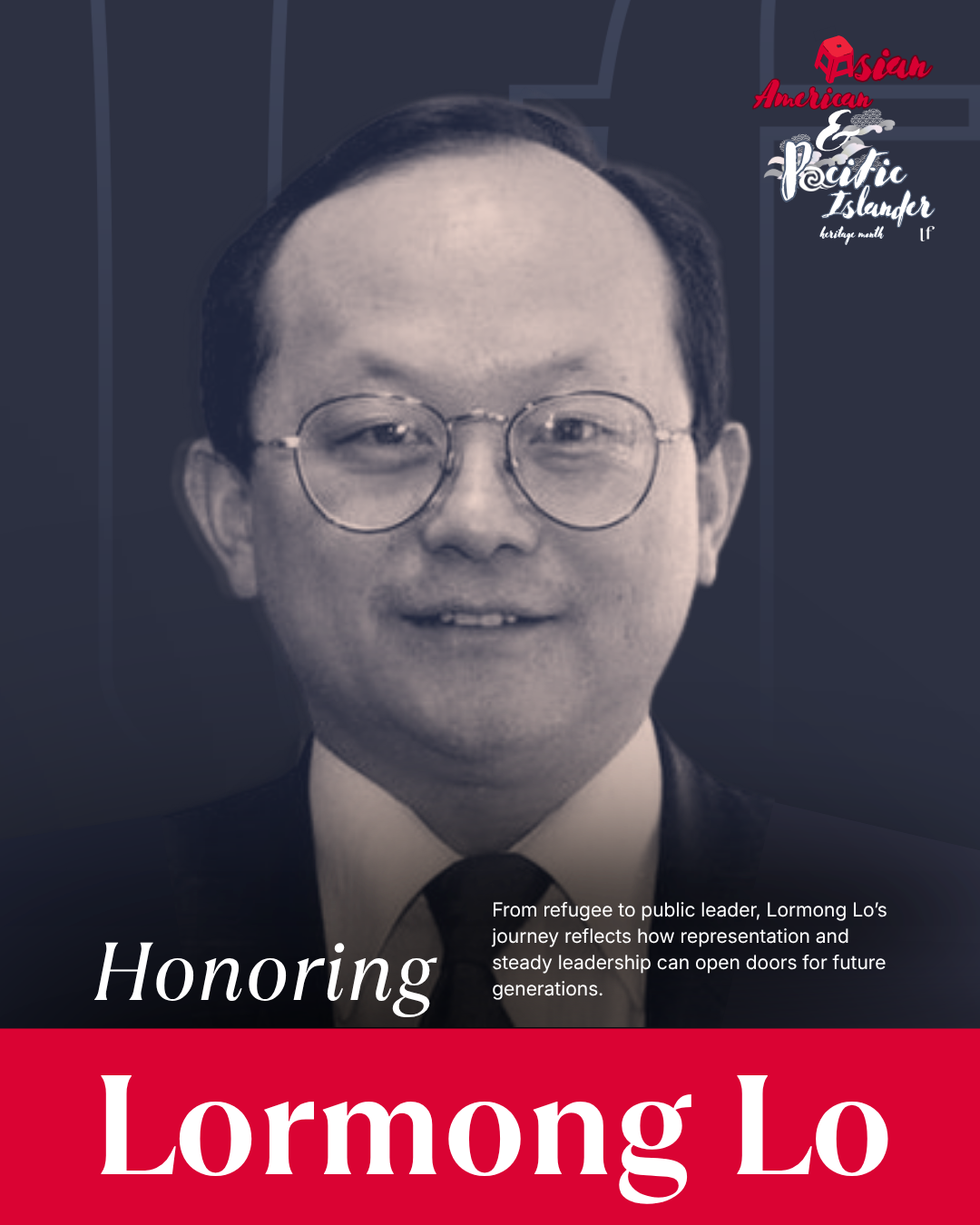
Lormong Lo’s story is one of firsts, but also of quiet, steady impact.
Born in Vientiane, Laos, Lo was part of the Hmong community displaced by war in Southeast Asia. Like many Hmong families, his journey to the United States came through the refugee experience, eventually settling in Nebraska and beginning to build a new life in a place that, at the time, had little representation for people like him. He graduated from Ralston High School before going on to study at Creighton University, steps that positioned him for something few Hmong Americans had entered into at the time: public office.
In June 1994, Lo was appointed to the Omaha City Council, becoming the first Hmong American to serve on a city council anywhere in the United States. In a city the size of Omaha, that moment carried weight far beyond a single seat. It marked a shift in visibility and representation, not just locally, but nationally. He went on to be elected to a full term in 1997, serving through 2001, and during that time also became the first Hmong American to serve as president of a city council and to take on the role of acting mayor. His leadership was not without challenge, but it reflected a willingness to step into difficult decisions and navigate complex civic issues at a time when few in similar positions shared his background.
Beyond Omaha, Lo’s influence extended into national conversations. Through his work with the Asian Pacific American Municipal Officials (APAMO), he engaged with policymakers and leaders across the country, contributing to discussions around economic development, housing and immigration. He also took part in meetings at the White House across multiple administrations, bringing local perspectives into broader national dialogue.
At the same time, his connection to the Hmong community remained central. He was among the first Hmong Americans born in Laos to return and hold direct conversations with Lao government officials, addressing ongoing concerns affecting Hmong communities. It was a rare and significant step, reflecting both courage and a commitment to advocacy beyond borders.
Lo’s journey, from refugee to public official, helped open doors for future generations. His presence in local government challenged assumptions about who could lead, and his work created space for others to follow. He passed away in 2011. He is remembered as a trailblazer for the Hmong American community and a figure of cross-cultural bridge-building in Nebraska politics.
